Showing posts with label World News. Show all posts

Thursday, January 28, 2021

Do binaural beats benefit your brain?

 If listening to ethereal, almost otherworldly, sounds for a few minutes every day while you study and work could make your brain more creative and less prone to anxiety, wouldn’t we all do it? One such concept, binaural beats, has been touted by some to be a bit of a magic cure for handling stress. But much like everything else in the wellness world, there’s just not 100 percent consensus on how well they work or if they work at all. And as trendy as they are, the scientific community has known about them since the 1800s.

Binaural beats, simply put, are an illusion. What happens is when you listen to two pure tones separated into each ear, the tiny difference causes a “frequency mismatch” as the sound travels to the auditory part of your brainstem, says Hector Orozco Perez, an author of a recent study on the mysterious beats. This frequency mismatch creates a third tone that waxes and wanes in volume—but the catch is that the sound only exists in your brain. So while you hear a sort of rhythm between the two notes in binaural beats, your head is just creating a filler sound that bridges the difference between the two original sounds. For example, if your right ear is hearing 400 Hertz, and your left ear is hearing 410 Hertz, then your binaural beat comes in around 10 Hertz.

What makes binaural beats interesting is their ability to synchronize, or entrain, your brain’s electrical response to adhere to a certain rhythm. “That’s true, but that’s nothing special.” Orozco Perez says. “In auditory research, we know you can synchronize your brain with any kind of stimulus.”

Our brains have certain electrical wavelengths for communicating thoughts, emotions, and so on. Tightly wound and fast-paced waves are associated with alertness and focus, while slower, more spaced-out waves are associated with relaxation and sleep. So, theoretically, if we could “sync” our brains up with a certain wavelength of noise, maybe we could tap into different neural pathways and nudge our brains to meditate or memorize equations better. But of course, hardly anything in neuroscience is as simple as that.

In Orozco Perez’s study, he and his colleagues found that while binaural beats do in fact condition our brains to sync up to a wavelength, monaural beats, which sound pretty much the same but don’t require headphones to get each ear to hear something different, do a better job anyway. And either way, neither of the beats caused any impact on cognitive performance or mood change.

“If you ask my personal opinion, this is a bit of a fad,” says Joydeep Bhattacharya, a psychology professor at Goldsmiths, University of London. It’s not that binaural beats don’t have any potential for teaching us how our brain works, he says, but we need a whole lot more research before scientifically claiming that they’re the next big solution to increasing focus and decreasing anxiety.

Bhattacharya adds that there need to be more experimental approaches to seeing how entrainment actually works in the brain, like switching up the range of frequencies tested and gauging changes with or without background sound. “We still don’t know, for example, why certain parameters or frequencies are more prone to induce the effect,” he says. And beyond just looking at what happens in the brain, scientists still need to research the neurological connection between alleged behavioral changes and noises. After all, what might be going on in the brain doesn’t necessarily translate to the way we act in a predictable manner.

There’s also the question of how individual people might connect to individual sounds. Not only are there nearly infinite ways to create binaural beats with nature recordings and ambient noise, but the way listeners react to them can vary widely, too. In one study, alpha binaural beats, or ones with a pulsing beat similar to that of “alpha” brain waves that are associated with a calm and relaxed state, helped some subjects do better in a creative task. Others, however, performed worse, especially when their estimated dopamine levels were high.

So just like everything in the wellness industry, take binaural beats with a grain of salt. Thankfully, unlike certain “biohacking” techniques like intermittent fasting or DIY gene editing, there’s no real harm in testing out binaural beats.

“We know that rhythmic stimuli can help people concentrate,” Orozco Perez says, but adds that binaural beats may not be universally helpful. “If they work for you, they work for you.”

To put it plainly, if you dig the illusory beats, then give them a try. But the science just isn’t quite there to say whether a binaural playlist will make your brain do anything special.

Thursday, January 21, 2021

Biden's new-look Oval Office is a nod to past US leadership


Biden's new-look Oval Office is a nod to past US leadership


Incoming presidents bring their own personal touch to the Oval Office and much is being read into the way Joe Biden has chosen to decorate his new place of work.

The room has been filled with portraits and busts of some of the most iconic and influential leaders of American history.

"It was important for President Biden to walk into an Oval that looked like America and started to show the landscape of who he is going to be as president," Ashley Williams, the deputy director of Oval Office operations, told The Washington Post during an exclusive tour.

Gone is the portrait of Andrew Jackson, the 7th president and a populist with whom President Trump frequently identified and who also faced censure although he was never impeached.

His portrait, to the left of the seat of the Resolute Desk, has been replaced with one of Benjamin Franklin, a founding father who was also a leading writer, scientist and philosopher. The Post said Franklin's portrait was intended to represent President Biden's interest in following science as he attempts to tackle the coronavirus pandemic.


From his desk, Mr Biden will look up to see, flanking the fireplace, busts of Rev Martin Luther King Jnr and Robert F Kennedy - two men whose impact on the civil rights movement Biden is said to have frequently referenced.

Other busts around the room include another key figure in the civil rights movement, Rosa Parks. There is also an Allan Houser sculpture depicting a horse and Chiricahua Apache rider once belonging to the Hawaii Democrat Senator Daniel Inouye, the Post reports.


Above the fireplace hangs a large portrait of Franklin D Roosevelt, the president who led the country through the Great Depression and World War Two.

The portrait of another former president, Thomas Jefferson, has been paired with a man he frequently disagreed with, the former Treasury Secretary Alexander Hamilton as "hallmarks of how differences of opinion, expressed within the guardrails of the Republic, are essential to democracy", the Post quotes Biden's office as saying.

Portraits of two other celebrated former presidents, George Washington and Abraham Lincoln, have also been paired.


Many on social media noted, on the table behind Mr Biden, a bust of César Chávez, the Mexican-American labour leader who fought for the rights of farm workers in the 1960s and 70s. His bust sits alongside framed photos of Mr Biden's family.


Gone on Wednesday were the gold curtains and rug that Mr Trump brought in when he assumed office in 2017. They had been replaced by a dark blue rug and darker gold curtains that adorned the Oval office when President Bill Clinton was in power, the Post reports.

Flags of the different branches of the military have also been replaced with an American flag and another with a presidential seal.

A controversial bust of Britain's wartime leader Sir Winston Churchill has also gone.

President Trump had promised to restore the bust to the Oval Office after it was removed by his predecessor Barack Obama. The then foreign secretary Boris Johnson - now UK prime minister - had at the time accused Mr Obama of having an "ancestral dislike of the British empire".

This time, his spokesman, said: "The Oval office is the president's private office and it's up to the president to decorate it as he wishes".

Sunday, January 17, 2021

The Instagrammers who worry Iran

 The Instagrammers who worry Iran

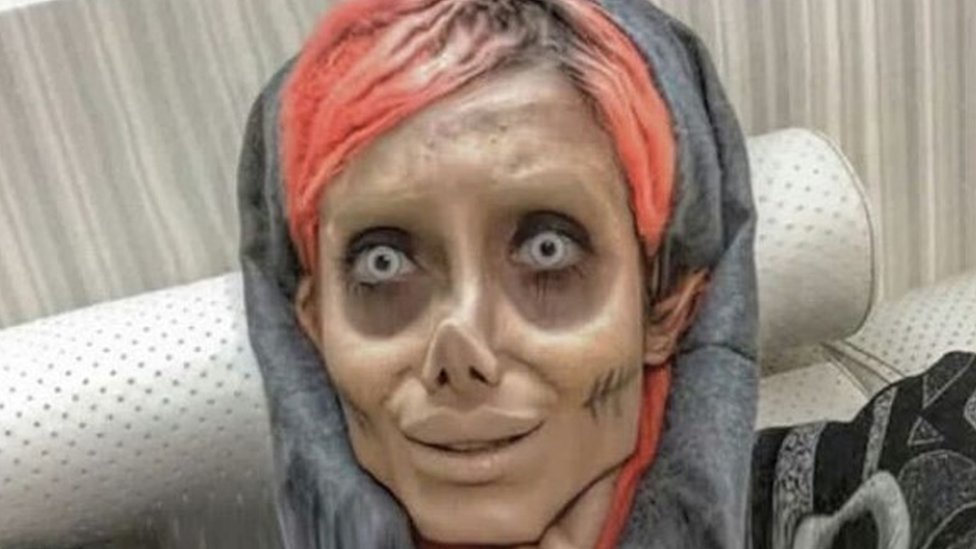
Shot of Sahar Tabar's InstagramIMAGE COPYRIGHTINSTAGRAM
image captionHuman rights activists say Instagramer Fatemeh Khishvand has been made an example of by Iran

Growing up in Iran, Fatemeh Khishvand dreamed of becoming famous, posting selfies on Instagram in the hope of getting noticed.

Typical enough - only Ms Khishvand's selfies were anything but.

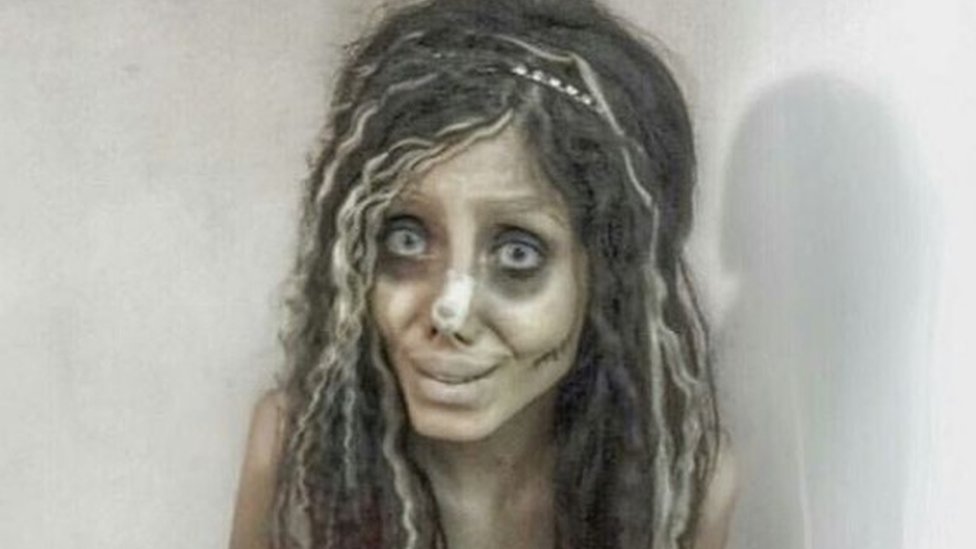
They were heavily doctored photos in which her face appeared gaunt, distorted, and enhanced by make-up.

Posted under a pseudonym, Sahar Tabar, the photos were so striking they attracted international media attention when they first appeared in 2017.

In some, Ms Khishvand bore an uncanny resemblance to American actress Angelina Jolie. This led to false rumours that the teen had undergone 50 cosmetic surgeries to look like the Hollywood star but, as she would later clarify, the Corpse Bride character from Tim Burton's titular musical fantasy was her true inspiration.

Soon, her alter ego had almost 500,000 followers on Instagram, earning her the fame she had always desired.

But that fame came at a price.

Short presentational grey line

In Iran, it can be dangerous to post on social media. The country's Shia Muslim authorities enforce strict laws about what can and cannot be posted. To them, Ms Khishvand's photos were seen as crimes, not the clever Photoshop trickery of a teenage girl.

So, in October 2019, Ms Khishvand was arrested on a raft of charges, including blasphemy, instigating violence, insulting the Islamic dress code and encouraging corruption among young people.

Her Instagram account was deleted and for more than a year she languished in jail, detained without bail. Eventually an Islamic Revolutionary Court - known for their secrecy and politically motivated rulings against dissidents - delivered a sentence of 10 years in prison in December last year.

Instagram shot of Sahar TabarIMAGE COPYRIGHTINSTAGRAM
image captionMs Khishvand came to attention for her resemblance to a "zombie" version of Angelina Jolie

The severity of the punishment was met with shock and condemnation.

"The Islamic Republic has a history of arresting women for dancing, for singing, for removing their compulsory veiling, for entering a stadium, for modelling, but come on - this time, for just using Photoshop," Masih Alinejad, a prominent Iranian journalist and activist, said in a Twitter video.

The BBC is not responsible for the content of external sites.View original tweet on Twitter
1px transparent line

As Ms Alinejad's reaction suggested, Ms Khishvand's case is considered a new extreme in Iran's draconian treatment of social media users.

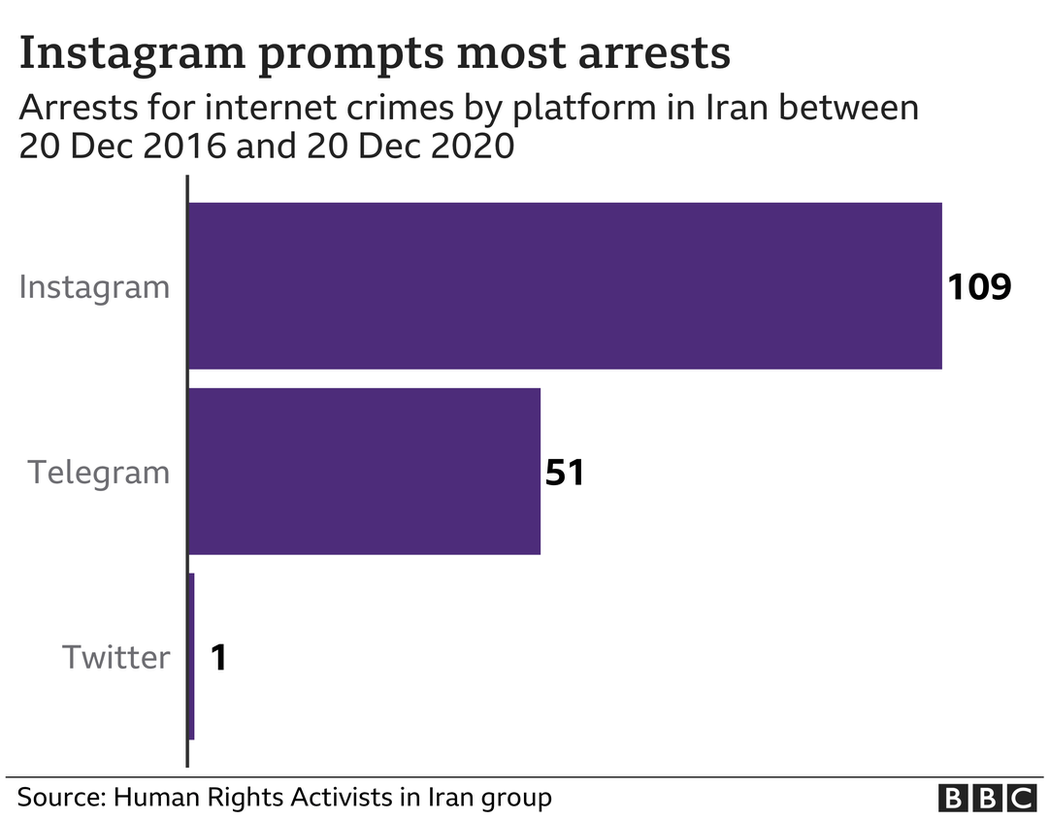
Precise data on internet crimes in Iran is hard to come by. But, according to research by the US-based Human Rights Activists in Iran group, at least 332 people have been arrested for their internet activities since 20 December 2016. Of those, 109 were for activities on Instagram, the group said.

A graphic showing the number of arrest for internet crimes by platform between 20 December 2016 and 20 December 2020 in Iran
1px transparent line

As the only major social media network not blocked by the government, Instagram is a popular platform for young Iranians to express themselves.

This has created a dilemma for the government, which experts say is loath to block the tool for fear of provoking unrest, hampering business owners who rely on it for advertising, and severing a useful means of communication with its citizens. Instead, the government has attempted to act as a moderator.

Brexit: 'Partnership' on spending replacement EU cash

 Brexit: 'Partnership' on spending replacement EU cash

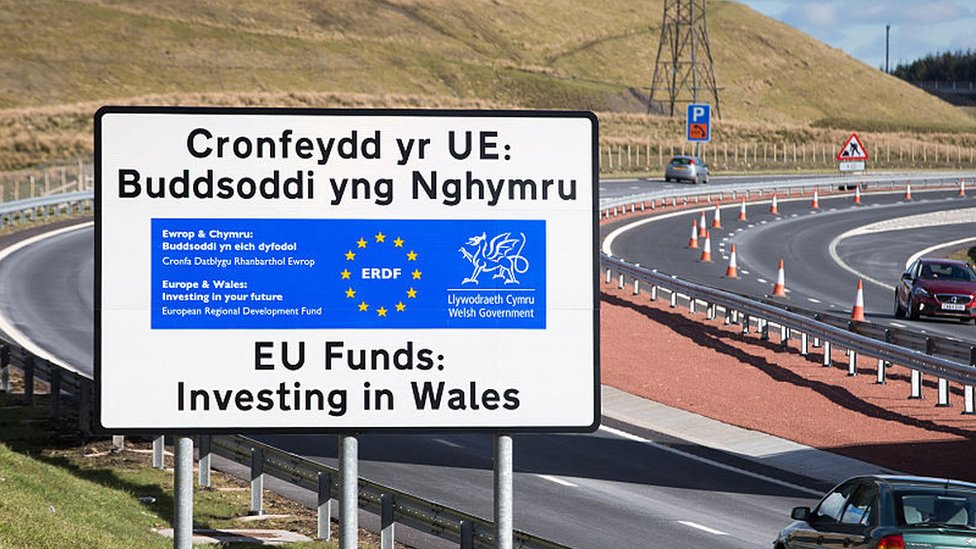
A465 near Ebbw Vale, part funded by EU structural fundsIMAGE COPYRIGHTGETTY IMAGES
image captionMuch of the EU cash for Wales has gone to the West Wales and the Valleys region

A "partnership" with Westminster, Wales' politicians and councils will decide how replacement EU cash is spent, Welsh Secretary Simon Hart says.

But Plaid Cymru said devolution will "exist in name only" with the UK government accused of "siphoning money away from our poorest communities".

Liz Saville-Roberts was responding as further details of a new Shared Prosperity Fund (SPF) were made public.

It replaces European Commission development and social fund grants.

Mr Hart said Westminster "intend to work alongside" ministers and councils.

"The idea is that this is going to be much more of a partnership effort than it's ever been before," he said.

"And not just a partnership by the way between politicians and Westminster and Cardiff.

"Local authorities and many more people are going to be involved in this."

Money used to move from Brussels to devolved nations like Wales with aid administered by the Welsh Government.

But, in a letter to the Scottish finance secretary, UK Treasury Secretary Stephen Barclay has said the Shared Prosperity Fund would be a UK project, help "levelling up" areas most in need.

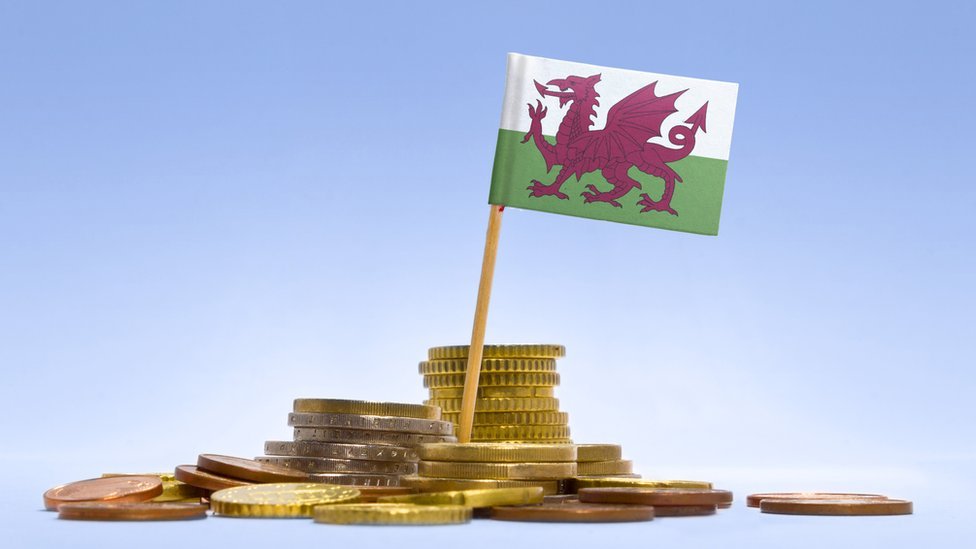
Welsh flag and Welsh coinsIMAGE COPYRIGHTGETTY IMAGES
image captionUK ministers have previously promised Wales would not receive "a penny less" in funding after the Brexit transition period

Ms Saville Roberts, Plaid's Westminster party leader, said: "First a power grab, now a funding grab. Hot on the heels of the ruinous Internal Market Bill, this is another shameless Tory attack on devolution.

"They're siphoning money away from our poorest communities, and unless we stop them, devolution will exist in name only."

Examples of where EU money was spent in Wales include colleges and roads, such as the Heads of the Valleys.

Following Brexit, ministers in the devolved countries and Westminster have been arguing over who should control the cash, with First Minister Mark Drakeford saying any attempt to centralise control over funding in London would be an "attack on devolution".

He said: "The UK SPF will help to level up and create opportunity across the UK in places most in need.

"It will operate UK-wide, using the new financial assistance powers in the UK Internal Market Act.

"We will ramp up funding so that total domestic UK-wide funding will at least match EU receipts on average reaching around £1.5bn a year."

'Not appropriate'

Responding, a Welsh Government spokeswoman said it was "not appropriate" for the UK government to "involve itself with clearly devolved matters".

"The SPF should be run in Wales, much as the EU Funds it replaces have been," she added.

The spokeswoman said a framework for regional investment was published in November outlining how the SPF would be used in Wales."It is disappointing that the UK government has neither provided the promised funding to replace the EU funds nor given any clear indication of how it sees the SPF working in devolved administrations, other than to suggest that it intends to ignore the clear consensus in Wales on how the funds should be deployed that is set out in our framework," she added.

Mother-and-baby homes: Archbishop 'disappointed' if churches scapegoated

 Mother-and-baby homes: Archbishop 'disappointed' if churches scapegoated

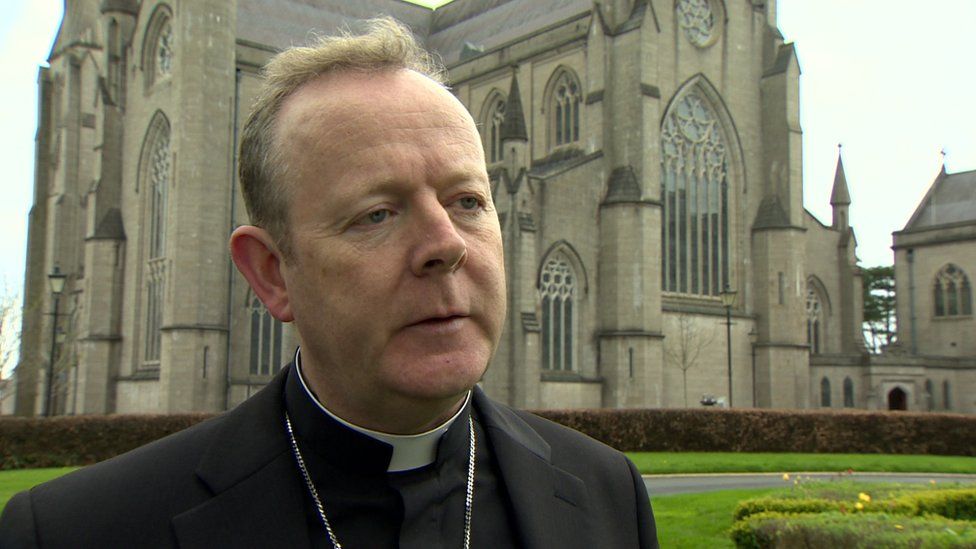
Archbishop Eamon Martin
image captionArchbishop Martin apologised to survivors for the long-lasting hurt and emotional distress they suffered

The leader of the Irish Catholic Church has said he would be disappointed if religious congregations were to carry all the blame for the country's mother-and-baby homes.

Archbishop Eamon Martin said he accepted the church "needs to do reparation".

A 2,800-page report found an "appalling level of infant mortality" at the homes.

The institutions housed women and girls who became pregnant outside marriage.

Established in the 19th and 20th Centuries, about 9,000 children died in the 18 institutions under investigation, some of which were operated by the Irish Catholic Church.

Many children born in the homes were adopted or taken to orphanages run by Catholic nuns.

'Banished by society'

The Church of Ireland has apologised for its involvement in running a Protestant mother and baby home in Dublin.

Taoiseach (Irish prime minister) Micheál Martin apologised for the "profound and generational wrong" done to survivors of mother-and-baby homes.

Archbishop Martin also "apologised unreservedly" for the church's role in a culture which "frequently stigmatised, judged and rejected" people.

Speaking to Irish broadcaster RTE on Sunday, Archbishop Martin said the homes were "commissioned by the state and local authorities, county councils and expected to intervene when the rest of society had basically banished these mothers".

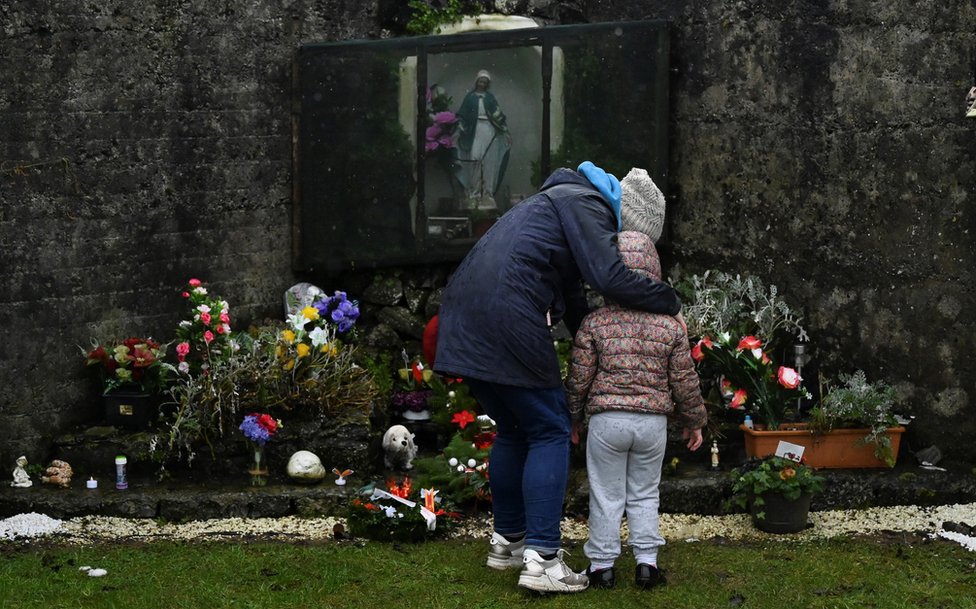
A mother and her daughter pay their respects at the Tuam graveyard where the bodies of 796 babies were uncoveredIMAGE COPYRIGHTREUTERS
image captionThe mother and baby scandal became an international news story when 'significant human remains' were found in the grounds of a former home in County Galway

He said the homes were subject to inspection and oversight by the Irish state, but there was clear evidence that the "day-to-day running of these institutions was very harsh".

"As soon as women and children went into these places, society didn't seem to want to know any more, be they living or dead," he added.

The archbishop added that the church could "show our apologies are sincere by being willing to contribute" to a compensation scheme.

"Minister O'Gorman has asked for the church to make a contribution to whatever restorative scheme is put in place.

"I do think religious congregations will be willing to play their part generously."

Highest in the world

The commission behind the report made 53 recommendations, including compensation and memorialisation.

Its report stated that while mother-and-baby homes existed in other countries the proportion of unmarried mothers who were in the institutions in Ireland was probably the highest in the world.

However, leader of the Seanad (upper house of the Irish parliament) Regina Doherty described the report as "callous".

She told RTÉ that it was "not good enough to stand alone as the nation's response to generations of women who were mistreated at the hands of the church and the state".