Showing posts with label Alternative Medicine. Show all posts

Monday, September 11, 2017

THC from cannabis found to dramatically slow memory loss by protecting brain cells


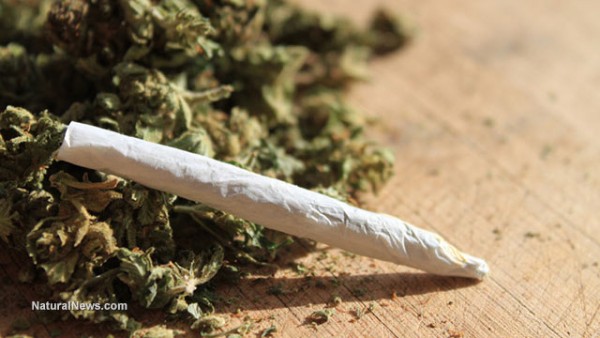
Despite the Drug Enforcement Administration (DEA) still classifying marijuana as a schedule 1 drug (similar to heroin, ecstasy, LSD, and peyote), a new study confirms that the active compound in cannabis, tetrahydrocannabinol (THC), can benefit the elderly — particularly in preventing memory loss. Researchers from Germany studied THC’s effects on the brains of older mice and found that these animals regained mental clarity after being given pot. To be more specific, the scientists found that the neural connections within the hippocampus, which is responsible for memory and emotions, were firing at a rate comparable to younger adults. These findings, if proven similar among humans, could signal better and more affordable treatment options for adults suffering from dementia or Alzheimer’s disease.
Andreas Zimmer, lead author of the study and professor of psychology at Bonn University in Germany, says that the results of this research aids in understanding marijuana’s use as medicine. “Chronic, low-dose treatment with THC or cannabis extracts could be a potential strategy to slow down or even reverse cognitive decline in the elderly,” he stated in an article on DailyMail.co.uk. “THC treatment for 28 days restored the learning and memory performance of mature and old animals in the water maze, novel object recognition social recognition tests to the levels observed in young mice.”
For the study, Professor Zimmer and his team carried out three experiments. The team gave low doses of THC to mice at three different ages: two months, 12 months, and 18 months. In human age, this is roughly the equivalent to 20, 58, and 64-years old, respectively. Over the course of 28 days, the mice were subjected to three tests. In the first, mice had to learn how to navigate around a water maze. The second experiment had mice locate a specific object. The last test related to partner recognition. In all three tests, mature and old mice performed worse than the young group. However, when these groups were introduced to THC, the scientists found that their performance significantly improved. Researchers also noted a profound enhancement in memory and cognitive performance. Professor Zimmer published their findings in Nature Medicine and concluded with, “Cannabis preparations and THC are used for medicinal purposes. They have an excellent safety record and do not produce adverse side-effects when administered at a low dose to older individuals. Thus, chronic, low-dose treatment with THC or cannabis extracts could be a potential strategy to slow down or even to reverse cognitive decline in the elderly.”

Cannabis as medicine?

Zameel Cader, an associate professor in clinical neurosciences at Oxford University commented on the study on NewsWeek.com and said the results of the study were “interesting.”
He was mentioned as saying, “first of all there’s clearly growing interest in the potential therapeutic role of cannabinoids, and in this particular case, THC on various human conditions. This paper is addressing a possible role for that compound in memory and cognition, which is relevant to disorders such as Alzheimer’s and other dementias.” Professor Cader does caution the public not to jump to conclusions though; these findings are limited to animal models. Testing on humans, he said, would be problematic. “This is a challenge faced by anyone wanting to develop a therapy for a human disorder such as dementia. Human lifespan is very extensive. So the question would be, when would be the most appropriate time to give these kinds of medications? Over what period of time do you need to evaluate the effects? In humans it could be years before an effect is noticed.”
Professor Cader’s statement is reflective of the general medical community’s opinion regarding marijuana use. The issue here is the supposed adverse effects (especially in terms of addiction) marijuana can have. That being said, recent research indicates that cannabis use among older adults is rising. Data from the annual National Survey of Drug Use and Health (NSDUH) showed that from 2002-2014, the number of adults aged 50 to 64 who reported to have used cannabis more than tripled from 2.9 percent to nine percent.
Sources include:

Monday, June 19, 2017

medical marijuana, menstrual cramps, Menstrual cramps and cannabis

 Women who experience debilitating menstrual cramps could soon be allowed to take marijuana for relief, at least in the state of New York where lawmakers are currently mulling the approval of including dysmenorrhea  (menstrual cramps) as one of the health conditions that allow medical marijuana. However, gynecologists say that more research needs to be done to recommend marijuana as a cure for menstrual cramps, the DailyMail.co.uk reported.
“Patients ask me about it all the time. It could be that in five years it’s the first thing I recommend. But right now we need a trial into it. There simply isn’t enough research to say one way or the other,” gynecologist Dr. Lauren Streicher said in the report.
Cannabidiol or CBD is the non-psychoactive component in marijuana that is suggested to work against menstrual cramps. The component has relaxing properties that could help ease muscle contractions in the uterus that cause the pain.
There are already a handful of marijuana products on the market made specifically to combat menstrual pain. Many of these products do not just contain CBD but also THC, marijuana’s psychoactive component that causes the “high” feeling experienced by those who consume the herb.
Most of the marijuana products for menstrual pain have not yet been approved by the FDA, and medical experts have expressed their concern over using the product. General practitioner Dr. Helen Webberly urged caution and, like Streicher, doubted such products because of the lack of research about them.
“I would be very worried about women using this product before it has been fully evaluated,” she was quoted as saying in the report.
However, the women who have actually tried marijuana for their period pain attest to the herb’s efficiency when it comes to providing relief.
In an article on Bustle.com, writer Marley Russell tried seven different marijuana products to see which worked best with her severe menstrual cramps. The products that Russell tried came in different forms, including tampon-like suppositories inserted into the vagina, tinctures dropped on the tongue, body balms scooped into the vagina, and even marijuana-infused cacao taken as hot chocolate. The products had varying levels of THC and CBD.
While Russell felt significant relief and relaxation with all of the products she tried, she ranked vaginal suppositories by Foria and cannabidiol CBD tincture by Magnolia Wellness as the best. The former was more THC-heavy at 60 mg THC and 10 mg of CBD, though as Russell said, using it did not make her high. Instead, she felt relief within minutes of inserting the suppository into her vagina.
“It was like all my pelvis muscles had been holding their breath and suddenly let it out, all at once. It was magic…It was like mainlining medicine straight to my uterus muscles,” she wrote.
Meanwhile, the cannabidiol CBD tincture had a higher CBD ratio, containing 13.39 mg of CBD and just 2.53 mg of THC per milliliter. Russell said that the product worked almost instantaneously, and while she took it orally with two drops of the tincture under her tongue, she felt completely functional and normal — not at all “high”.
“If you live in a place where medical or recreational marijuana is legal, your cramps are getting your down, and other painkiller options aren’t working, I would recommend checking out any of these products,” Russell wrote.
In states where medical marijuana is legal, the controversial herb has been approved as a treatment for a variety of health conditions, many of them painful and debilitating. These diseases include HIV, Alzheimer’s disease, ALS, multiple sclerosis, and even cancer.
Get more news about medical marijuana on CannabisCures.news.
 Sources include:

Sunday, June 11, 2017

Cancer Diagnoses / Why I Chose the Holistic Approach

As soon as I received my cancer diagnosis, I started to educate myself. I wanted to understand as much as possible what was happening to me, analyze all the facts and make a rational decision.
I gathered information from different physicians and clinics in various geographic areas. I read books, including “Cancer Step Outside the Box” by Ty M. Bollinger, “Beating Cancer with Nutrition” by Patrick Quillin, and “The China Study” by Thomas and T. Colin Campbell. I visited a wide range of websites and read what seemed like hundreds of articles. I attended lectures, read postings on discussion boards, and more. I know this may not be realistic for many cancer patients but I do believe a patient must be empowered to make the best choice for them once they understand all the facts.
I gathered all the facts, laid it all out, prayed, and meditated. I know this may not be realistic for many cancer patients but I do believe a patient must be empowered to make the best choice for them once they understand all the facts. I know that some people are just too ill to do all of this homework, that they really need an advocate to handle this for them, I was grateful to be able to look at all the statistics, read all the information, and make my own decision. Because ultimately I think that if we really sit with ourselves and spend time with ourselves in stillness, and truly focus on the facts that are laid out there, we will know what we need to do.
And the thing that was resonating with my mind and spirit and inner being was the holistic approach. This is what made sense to me. I just couldn’t grasp the idea that just by removing a body part healing would take place. I knew that my body was created in perfection and there is a reason why I developed cancer. I decided to embark myself on the road less traveled and went on quest to find to cause and cure of my cancer.
This conviction was reinforced in my consultations with various medical specialists, especially the surgeons. When I would ask these specialists questions about why I had cancer, how my diet may have impacted my situation, or what additional steps I could proactively take to improve the situation, they had no answers. None. Nada. Zip. The answers I got were along the lines of “It’s just bad luck, maybe something in your genes. But that’s okay. We’ll just remove it and treat it and then you’ll continue going on living your life as you always have.”
But this just did not make sense to me. God did not create us to get cancer. There must be external and/or internal influences of some sort. Take food, for example. If you look at the things that mankind is now doing to our food—pesticides, genetically modified organisms (GMOs) and other toxic things—it seems to me that this must have an impact on our bodies today. If you compare how food was grown and produced 50 years ago to now, you’ll see it was completely different. It’s no coincidence that cancer rates were much lower then.
Nutrition is just one factor. It seemed to me that there must be many more. I have now learned that cancer is a multifactorial disease and a cancer diagnoses is the result of an acquired deficiency. The question is to what?
I felt that I had to take responsibility for what was happening to me, and be responsible for making changes for my health. Because I wanted to live, and I believed that if I had been doing things right in the first place my body would not have developed cancer. So why would I want to go right back to whatever it was that got me here? Wouldn’t that approach increase the chances that I would get cancer again?
The truth is, throughout this entire education and fact-gathering process, the one thing that kept resonating with me was the holistic approach. It made sense. The conventional medical approach did not. So the holistic approach is what I chose.

Saturday, April 29, 2017

Twelve essential oils that fight cancer and boost immunity

image

One-third of American’s are seeking alternative medicine for either their sole medical treatment or for complementary medical treatment.  People are often incorporating vitamins, fish oil, probiotics, melatonin, deep breathing, yoga, or chiropractic care into their natural health arsenal.  It appears that natural health care trends are only projected to keep growing. (1)

One-third of Americans are seeking alternative medicine

The organic food market is expected to grow 14 percent between the years of 2013-2018 and the global essential oil market is expected to reach 11.67 billion dollars by 2022. (2,3)
Essential oils have been utilized in numerous cultures for decades to help remedy disease.  Essentials oils may have gained their appeal through their pleasant scents but will maintain their longevity due to research and the growing demand for alternative medicine.

Different varieties of Frankincense oil found to kill bladder cancer, breast cancer and skin cancer cells

The University of Oklahoma Health Sciences found that different types of frankincense oils are effective at killing cancer cells.  Boswellia carteri has been found to target cancerous cells in bladder tumors, killing them and leaving healthy cells alone.  Boswellia sacramay is thought to be effective in breast cancer prevention as well as for advanced breast cancers.  Boswellia sacrais is an effective and non-invasive treatment for basal cell carcinoma. Boswellia carteri and Santalum album both kill cancer cells in different ways, when combined they form a strong alliance to annihilate cancer. (4)

Twelve essential oils that help fight cancer, boost immunity and improve health and well-being

Frankincense oil is not the only effective oil for cancer.  Consider adding the following 12 oils to your collection in order to boost your immune system and help your body fight infection and disease.
  1. Black Pepper: Use for asthma, sinus congestion, chronic indigestion, cold,  respiratory infections, obesity, improper metabolism, urinary problems, cholera, headache, intermittent fever, toxic remains in the system, and cancer. (5)
  2. Cinnamon: Eighty studies have investigated cinnamaldehyde’s ability to inhibit tumor cell death and cancer cell apoptosis. (6)
  3. Clove: Clove oil contains 30x more anti-oxidants than blueberries which helps reduce free radical damage. (7)
  4. Oregano: Oregano’s active ingredient, carvacrol, shown to have anti-tumor effects on metastatic breast cancer cells. (8)
  5. Cardamom:  Cardamom essential oil shows to have chemopreventative and anti-tumor effects. (9)
  6. Fennel: Fennel contains terpenoid anethole, which has both estrogenic and chemopreventive effects. (10)
  7. Frankincense: Kills bladder cancer, breast cancer, and skin cancer cells. (4)
  8. Clary Sage: Clary Sage contains sclareol which has anticancer effects against breast cancer cells. (11)
  9. Melaleuca (Tea Tree): Tea tree oil was found to fight non-melanoma skin cancer in mice. (12)
  10. Helichrysum: Studies show that helichrysum oil lowers inflammation, fights against free radical damage and has corticoid-like effects. (13)
  11. Rosemary: One study concluded that a 1 percent rosemary essential oil was able to deactivate more than 90 percent of ovarian and liver cancer cells. (14)
  12. Thyme:  A 2010 study found that thyme oil was effective against breast cancer, lung cancer,a nd prostate cancer cells. (14)
Seeking out a licensed aromatherapist or medical practitioner can help you better understand how to use essential oils, their purposes and how they can promote your own personal well-being.
Sources included: