Showing posts with label Chemistry. Show all posts

Monday, September 11, 2017

Dogs proven to recognize themselves through precise sense of smell


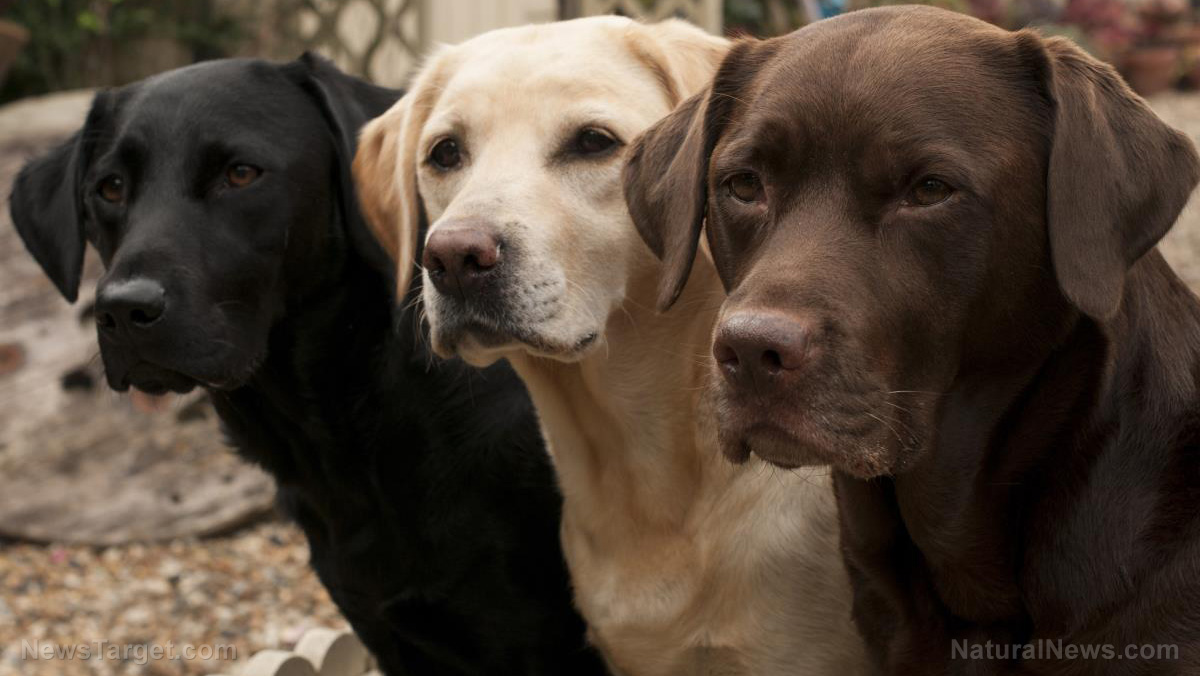
A new study published in the journal Behavioural Processes recently demonstrated a dog’s acute sense of smell was enough to make the animal recognize itself.
As part of the study, a team of researchers at the Barnard College in New York City examined 36 domestic dogs accompanied by their owners. The dogs were presented three urine samples: one was of their won, a second was that of other dogs, and a third one was their own sample but was modified.
The scientists observed how long the dogs took to examine the urine samples. The research team also assessed whether the animals would be able to distinguish their own urine even if it was already modified with an additional odor.
The experts confirmed that the dogs were able to identify their own urine samples. According to the scientists, the findings support the notion of self-awareness among the animals. The results also underscore the need to shift from human-focused idea to species-specific approach in testing self-awareness across various animal specifies.
“The sniff test of self-recognition (STSR) even when applied to multiple individuals living in groups and with different ages and sexes, provides significant evidences of self-awareness in dogs, and can play a crucial role in showing that this capacity is not a specific feature of only great apes, humans and a few other animals, but it depends on the way in which researchers try to verify it,” lead researcher Dr. Alexandra Horowitz told Science Daily online.

Recent findings support previous hypothesis

The results of the recent study coincide with an experiment conducted last year. The hypothesis, proposed by Professor Roberto Cazzolla Gatti of the Biological Institute of Tomsk State University in Russia, demonstrates how sniffing can be a form of self-recognition among dogs.
Dogs, along with other animals — such as  several species of monkeys, giant pandas, sea lions, and birds — are known to fail at self-recognition as measured through the mirror test. According to the professor, the ability to instantly recognize one’s own image is particularly rare in the animal kingdom.
The expert said that dogs have previously shown no interest in looking at the mirror except to sniff and urinate around the object. The professor also noted that canines in general have high levels of cognitive complexity, but previous attempts to demonstrate their capacity to recognize themselves have been inconclusive.
“This sniff-test could change the way some experiments on animal behavior are validated. I believe that dogs and other animals, being much less sensitive to visual stimuli with respect to what, for example, humans and many apes are, cannot pass the mirror test because of the sensory modality chosen by the investigator to test the self-awareness and this in not, necessarily, due to the absence of this cognitive ability in some animal species,” Professor Roberto Cazzolla Gatti wrote in his researcher paper last year.
The professor also stressed that older dogs spent more time sniffing their urine, suggesting that self-awareness through scent-related cues may be dependent on age. The findings may be used in a variety of other animals including bats or moles, the expert said.
Sources include:

Tuesday, August 22, 2017

Scientists develop self-healing rubber that could mean punctured tires repair themselves as you drive


Flat tires and weak rubber bands may very soon become a thing of the past as researchers from the Harvard John A. Paulson School of Engineering and Applied Sciences (SEAS) recently developed a new tough, self-healing rubber.
While self-healing materials are not new, engineering the same properties on dry materials such as rubber poses a bigger challenge. According to the researchers, this is due to the rubber’s material make-up. Rubber is made up of polymers linked by permanent, covalent bonds that do not reconnect once broken.
The main hurdle was that both reversible and covalent bonds do not interact with one another, in the same way as water repels oil. To address this, the experts developed a molecular rope called randomly-branched polymers to link the two types of bonds on a molecular level. The research team were able to homogeneously mix two previously immiscible bonds.
Following the molecular process, the scientists were able to create a transparent, tough, self-healing rubber.
“Unlike conventional methods relying on co-solvents to promote mixing, we use molecules to physically tie these two types of bonds together, such that they are forced to mix at the molecular level. This enables a dry rubber that contains both reversible hydrogen bonds and permanent covalent crosslinks. The reversible bonds break and reform to enable self-healing ability, whereas the covalent bonds maintain the material integrity under large deformation. Consequently, the rubber is not only very tough as natural rubber, but also can self-heal upon damage,” corresponding author Li-Heng Cai told Digital Trends online.

This self-healing rubber is no typical material

According to the research team, a typical rubber material tends to snap at certain stress points once force is applied. However, the new self-healing rubber was found to develop crazes — a feature the same as cracks but otherwise connected by fibrous strands — throughout the surface when it is stretched.
The crazes were found to redistribute the stress when it comes in contact with a force. As a result, the material cannot detect a single point of stress that may cause it to crack or snap. The research team also stated that the crazes heal and the material reverts to its original form once the stress is released.
Harvard’s Office of Technology Development has already filed a patent application for the material and is currently seeking commercialization opportunities. The material’s self-healing properties may appeal to manufacturers of various rubber products.
“There is still a lot more to do. For materials science, it is not fully understood why this hybrid rubber exhibits crazes when stretched. For engineering, the applications of the hybrid rubber that take advantage of its exceptional combination of optical transparency, toughness, and self-healing ability remain to be explored. Moreover, the concept of using molecular design to mix covalent and reversible bonds to create a homogenous hybrid elastomer is quite general and should enable development of tough, self-healing polymers of practical usage,” senior author David A. Weitz said in a university press release.
Find more articles about materials science discoveries at Discoveries.news.
Sources include: