Showing posts with label Mother Nature. Show all posts

Monday, July 30, 2018

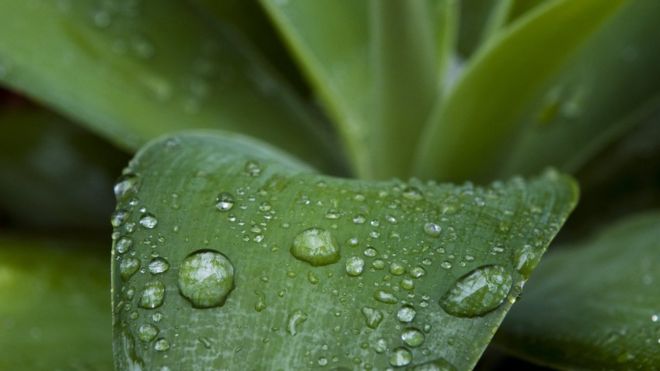
Petrichor: why does rain smell so good?


It turns out it's not just gratitude that makes rain smell so appealing after a long period of dry weather.

There's actually some chemistry involved too.

Bacteria, plants and even lightning can all play a role in the pleasant smell we experience after a thunderstorm; that of clean air and wet earth.

Known as petrichor, the scent has long been chased by scientists and even perfumers for its enduring appeal.

Wet earth

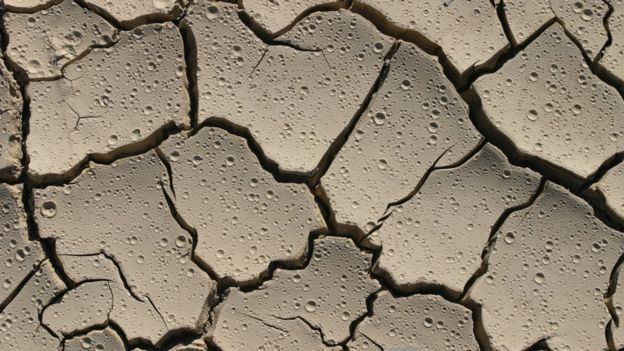
First named by two Australian researchers in the 1960s, the warm, earthy fragrance we experience when rain hits dry ground is produced by bacteria.

"These critters are abundant in soil," explained Prof Mark Buttner, head of molecular microbiology at the John Innes Centre.

"So when you're saying you smell damp soil, actually what you're smelling is a molecule being made by a certain type of bacteria," he told the BBC.

That molecule, geosmin, is produced by Streptomyces. Present in most healthy soils, these bacteria are also used to create commercial antibiotics.

Drops of water hitting the ground cause geosmin to be released into the air, making it much more abundant after a rain shower.

"Lots of animals are sensitive but human beings are extremely sensitive to it," added Prof Buttner.

Isabel Bear and RG Thomas, the researchers who first named the scent petrichor, found that as early as the 1960s it was being captured to sell as a scent called "matti ka attar" in Uttar Pradesh, India.

Now, geosmin is becoming more common as a perfume ingredient.

"It's a really potent material and it smells just like the concrete when the rain hits it," said perfumer Marina Barcenilla. "There's something very primitive and very primal about the smell."

"Even when you dilute it down to the parts per billion range, [humans] can still detect it," she added.

Yet we also have an odd relationship with geosmin - while we are drawn to its scent, many of us dislike its taste.

Even though it is not toxic to humans, the tiniest amount can put people off mineral water or wine when it is present.

"We do not know why we dislike geosmin," commented Prof Jeppe Lund Nielsen from Aalborg University in Denmark.

"It is not toxic to humans in typical found ranges, but somehow we associate it with something negative," he added.

Petrichor: The term:

Coined by scientists Isabel Joy Bear and Richard Thomas in their 1964 article "Nature of Argillaceous Odour", published in the journal Nature.

The word was coined from Greek petros, meaning "stone", and ichor, meaning "the fluid that flows in the veins of the gods"

Plants

According to Prof Nielsen, research also indicates that geosmin could be related to terpenes - the source of scent in many plants.
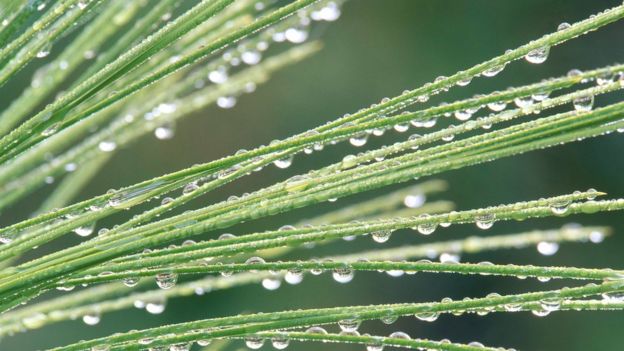

Rain could bring these fragrances out, says Prof Philip Stevenson, a research leader at Royal Botanic Gardens, Kew.

"Often the plant chemicals that smell pleasant are produced in leaf hairs... and the rain may damage these, releasing the compounds.

"Rain may also break dry plant material releasing chemicals in a similar way to when you crush dried herbs - the smell becomes stronger," he told the BBC.

Very dry periods may also slow down plant metabolism, with renewed rainfall giving it a kick start and causing plants to release a pleasant scent.
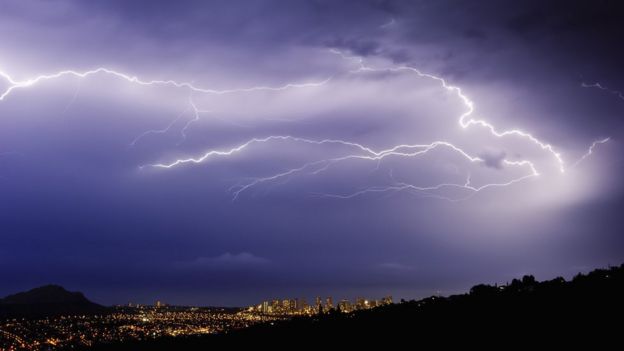

Lightning bolts

Thunderstorms have their role to play too, creating the clean, sharp scent of ozone - caused by lightning and other electrical discharges in the atmosphere.

Prof Maribeth Stolzenburg of the University of Mississippi explains: "Besides the lightning, the thunderstorm and especially the rain will improve the air quality. Much of the dust, aerosols, and other particulates are rained out and the air clears."

Sunday, June 11, 2017

MONKEY MARKETING: Indonesian monkeys STEAL objects from tourists, then BARTER them to other people for food

Image result for pics of monkeys

If you are planning a trip to Indonesia, better watch out for the monkey mafia roaming around the Uluwatu Temple in Bali. These cheeky little monkeys are among the world’s best pickpockets. They grab glasses, cameras, and cash from tourists which they then try to “sell” for some food to other people. Pretty genius and effective of them. A hat for a cracker is a sweet deal for a monkey.
Researchers from the University of Liège in Belgium were the first to study this cultural behavior among animals. Their findings were recently published in the journal Primates. They believe these monkeys have developed amazing cognitive abilities, similar to humans, the Daily Mail Online reported.
“The monkeys were always trying to steal my hat, my pen, even my research data,” said primatologist Fany Brotcorne who led the study.
Dr. Brotcorne explained that these primates are able to learn by watching one another. This once again shows how small the barriers between us and other nonhuman animals are. These findings add more weight to the evidence that humans are not the only conscious living things on our planet, although many of us like to think so.
“We see ourselves as unique in the natural world, sometimes forgetting there are other sentient creatures who are on a path to greater consciousness as well,” wrote Christina Sarich for the Waking times.

Yes, animals think, feel empathy, and have consciousness

In a landmark book titled “Beyond Words: What Animals Think and Feel” Carl Safina, a marine conservationist and professor at Stony Brook University on Long Island, offers a unique view on animal behavior that challenges the scientific orthodoxy. His views on the similarity between human and nonhuman consciousness, self-awareness, and empathy lead us to re-evaluate how we interact with other animals.
He wrote: “There is in nature an overriding sanity and often, in humankind, an undermining insanity. We, among all animals, are most frequently irrational, distortional, delusional, worried.”
Competition is the law of the jungle. Only the strong and smart survive. Footage of animals learning to use tools to their advantage or show empathy is nothing new to the natural world. Therefore, it should come as no surprise that these monkeys have mastered the skill of picking someone’s pocket in return for food. What’s more, they have been doing this for years, passing this handy skill from one generation to another. Never underestimate the brain of animals.

Free monkey market capitalism —  could we learn something here?

Unlike humans, these monkeys, however, have not learned that stealing is wrong. They provide goods and you’ll give them food in return. Nature is a free market, right? Though there is some room for improvement, their economic and social system is working just fine without any government interference. Could we learn something from the free market capitalism of these monkeys?
Just like these monkeys, humans are in an excellent position to collaborate and build social and economic orders based on cooperation rather than violent exploitation by governments and multinationals. Though there are a few reasons why our free market system is broken —  with government interfere and irrational decisions of people playing key roles —  some researchers believe free market capitalism, not government control, can make health care, among other things, more affordable and efficient.
According to these researchers, there is only one way to create more affordable health care: Get rid of government control and consolidation of physician services while creating more competition in the marketplace. Many believe this is an idea that would not only work to improve health care but the entire economy.
free economic and political system in which a country’s health system, trade, and industries are controlled by open markets and consumers, rather than by governments, price-setting monopolies, or other authorities, is a system we should all strive for. Don’t you think?
Sources: