Showing posts with label EARTH & CLIMATE. Show all posts

Monday, September 11, 2017

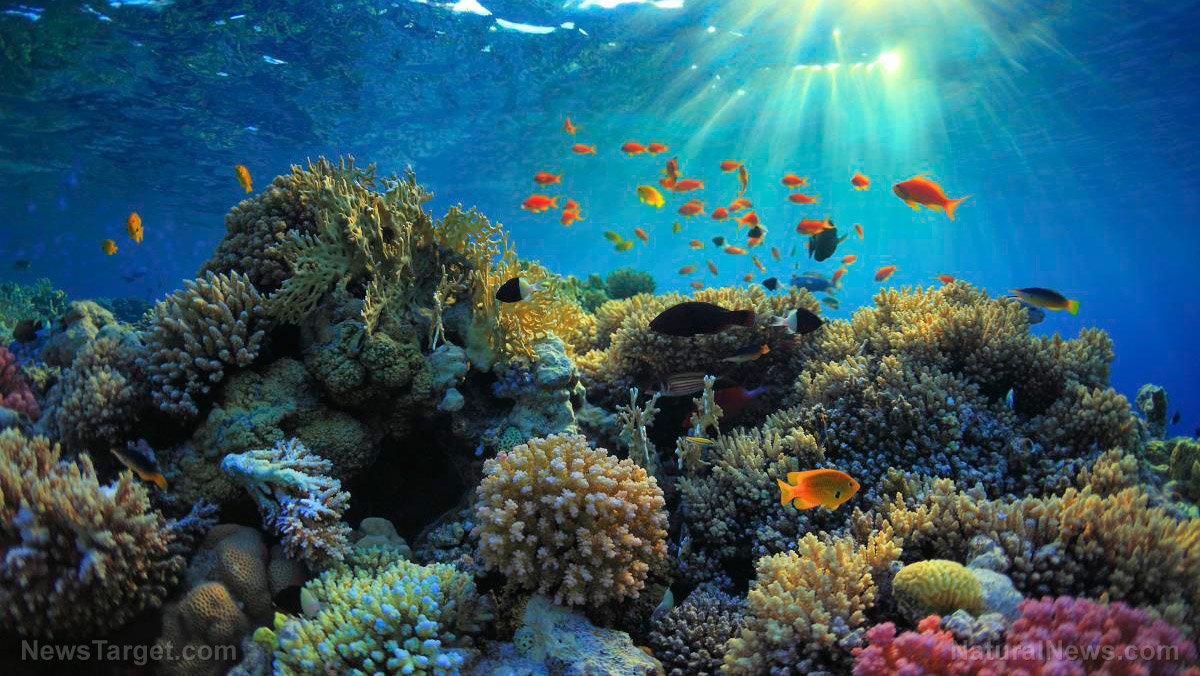
Reef fish found to be surprisingly resilient to ocean acidification caused by carbon dioxide (climate change)


Ocean acidification is a phenomenon that has been associated with increased dangers for species of fish, such as leaving them unable to flee from predators and enemies. This chemical reaction is the product of boosted carbon dioxide uptake from the atmosphere and results in seawater undergoing fundamental changes to its chemistry. However, a team of researchers have uncovered a surprising fact about ocean acidification: it may not be as bad as initially thought, and fish may in fact be less affected than previously believed.
The researchers used the facilities of James Cook University and the National Sea Sim Simulator at the Australian Institute of Marine Sciences to imitate a coral reef environment and its natural conditions. They managed to simulate water conditions that occurred naturally and that which is affected by human influence.
By subjecting clownfish and juvenile damselfish to changing levels of carbon dioxide, the researchers noticed that the fishes’ behavior varied depending on the conditions there were exposed to as they matured. As the researchers discussed in their study, the fish who were raised in stable carbon dioxide levels exhibited strange behavior when the carbon dioxide levels changed. Conversely, the fish who were exposed to conditions with changing carbon dioxide levels did not.
Moreover, the researchers discovered that the carbon dioxide levels surrounding coral reefs did not remain constant and were much lower during the day than at night. “Shallow water habitats where reef fish live can experience substantial natural fluctuations in water chemistry throughout the day,” said senior author Professor Philip Munday.
Lead study author and James Cook University PhD student Michael D. Jarrold added: “Our data suggest that these natural daily changes in water chemistry are enough to provide fish with a recovery period, reducing their sensitivity to higher carbon dioxide levels.”
Regardless of exposure, however, carbon dioxide levels at 1000 microatmospheres were found to affect the behaviors of all fish, meaning that there was a limit to the amount of carbon dioxide that fish could tolerate.
Still, the researchers have expressed joy about the outcome of their study. Speaking to ScienceDaily.com, Jarrold remarked: “We are thrilled about what we’ve found. Our results provide a greater level of optimism for reef fish populations in the future.”
More than just making it clear that carbon dioxide won’t be the end of all sea life, the researchers have also absolved “climate change” as the primary cause of ocean acidification. It’s a naturally occurring phenomenon, so how can its cause be pinned entirely on “climate change”? Fact is, it can’t. Constantly shifting carbon dioxide levels aren’t all that uncommon, and so many forms of sea life have acclimated to them with little issue. (Related: Ten alarming, REAL threats to the environment that are widely ignored by “climate change” advocates)
Go to Enviro.news for more stories that are like this one.
Sources include:

Wednesday, June 21, 2017

Technology which makes electricity from urine also kills pathogens, researchers find


A scientific breakthrough has taken an emerging biotechnology a step closer to being used to treat wastewater in the Developing World.
Researchers at the University of the West of England (UWE Bristol) (Ieropoulos & Greenman) have discovered that technology they have developed which has already been proven to generate electricity through the process of cleaning organic waste, such as urine, also kills bacteria harmful to humans.
Experts have shown that a special process they have developed in which wastewater flows through a series of cells filled with electroactive microbes can be used to attack and destroy a pathogen -- the potentially deadly Salmonella.
It is envisaged that the microbial fuel cell (MFC) technology could one day be used in the Developing World in areas lacking sanitation and installed in homes in the Developed World to help clean waste before it flows into the municipal sewerage network, reducing the burden on water companies to treat effluent.
Professor Ioannis Ieropoulos, who is leading the research, said it was necessary to establish the technology could tackle pathogens in order for it to be considered for use in the Developing World.
The findings of the research have been published in leading scientific journal PLOS ONE. Professor Ieropoulos, Director of the Bristol BioEnergy Centre, based in the Bristol Robotics Laboratory at UWE Bristol, said it was the first time globally it had been reported that pathogens could be destroyed using this method.
He said: "We were really excited with the results -- it shows we have a stable biological system in which we can treat waste, generate electricity and stop harmful organisms making it through to the sewerage network."
It had already been established that the MFC technology created by Dr Ieropoulos' team could successfully clean organic waste, including urine, to the extent that it could be safely released into the environment. Through the same process, electricity is generated -- enough to charge a mobile phone or power lighting in earlier trials.
In the unique system, being developed with funding from the Bill & Melinda Gates Foundation, the organic content of the urine is consumed by microbes inside the fuel cells, breaking it down and creating energy.
For the pathogen experiment, Salmonella enteritidis was added to urine flowing through the system, then checked at the end of the process to identify if bacteria numbers had been reduced. Results revealed pathogen numbers had dropped significantly, beyond minimum requirements used by the sanitation sector.
Other pathogens, including viruses, are now being tested and there are plans for experiments which will establish if the MFC system can eliminate pathogens completely.
John Greenman, Emeritus Professor of Microbiology, said: "The wonderful outcome in this study was that tests showed a reduction in the number of pathogens beyond the minimum expectations in the sanitation world.
"We have reduced the number of pathogenic organisms significantly but we haven't shown we can bring them down to zero -- we will continue the work to test if we can completely eliminate them."
Professor Ieropoulos said his system could be beneficial to the wastewater industry because MFC systems fitted in homes could result in wastewater being cleaner when it reaches the sewerage system.
He said: "Water companies are under pressure to improve treatment and produce cleaner and cleaner water at the end of the process. This means costs are rising, energy consumption levels are high and chemicals that are not good for the environment are being used."

Story Source:

Wireless charging of moving electric vehicles overcomes major hurdle


If electric cars could recharge while driving down a highway, it would virtually eliminate concerns about their range and lower their cost, perhaps making electricity the standard fuel for vehicles.
Now Stanford University scientists have overcome a major hurdle to such a future by wirelessly transmitting electricity to a nearby moving object. Their results are published in the June 15 edition of Nature.
"In addition to advancing the wireless charging of vehicles and personal devices like cellphones, our new technology may untether robotics in manufacturing, which also are on the move," said Shanhui Fan, a professor of electrical engineering and senior author of the study. "We still need to significantly increase the amount of electricity being transferred to charge electric cars, but we may not need to push the distance too much more."
The group built on existing technology developed in 2007 at MIT for transmitting electricity wirelessly over a distance of a few feet to a stationary object. In the new work, the team transmitted electricity wirelessly to a moving LED lightbulb. That demonstration only involved a 1-milliwatt charge, whereas electric cars often require tens of kilowatts to operate. The team is now working on greatly increasing the amount of electricity that can be transferred, and tweaking the system to extend the transfer distance and improve efficiency.
Driving range
Wireless charging would address a major drawback of plug-in electric cars -- their limited driving range. Tesla Motors expects its upcoming Model 3 to go more than 200 miles on a single charge and the Chevy Bolt, which is already on the market, has an advertised range of 238 miles. But electric vehicle batteries generally take several hours to fully recharge. A charge-as-you-drive system would overcome these limitations.
"In theory, one could drive for an unlimited amount of time without having to stop to recharge," Fan explained. "The hope is that you'll be able to charge your electric car while you're driving down the highway. A coil in the bottom of the vehicle could receive electricity from a series of coils connected to an electric current embedded in the road."
Some transportation experts envision an automated highway system where driverless electric vehicles are wirelessly charged by solar power or other renewable energy sources. The goal would be to reduce accidents and dramatically improve the flow of traffic while lowering greenhouse gas emissions.
Wireless technology could also assist GPS navigation of driverless cars. GPS is accurate up to about 35 feet. For safety, autonomous cars need to be in the center of the lane where the transmitter coils would be embedded, providing very precise positioning for GPS satellites.
Magnetic resonance
Mid-range wireless power transfer, as developed at Stanford and other research universities, is based on magnetic resonance coupling. Just as major power plants generate alternating currents by rotating coils of wire between magnets, electricity moving through wires creates an oscillating magnetic field. This field also causes electrons in a nearby coil of wires to oscillate, thereby transferring power wirelessly. The transfer efficiency is further enhanced if both coils are tuned to the same magnetic resonance frequency and are positioned at the correct angle.
However, the continuous flow of electricity can only be maintained if some aspects of the circuits, such as the frequency, are manually tuned as the object moves. So, either the energy transmitting coil and receiver coil must remain nearly stationary, or the device must be tuned automatically and continuously -- a significantly complex process.
To address the challenge, the Stanford team eliminated the radio-frequency source in the transmitter and replaced it with a commercially available voltage amplifier and feedback resistor. This system automatically figures out the right frequency for different distances without the need for human interference.
"Adding the amplifier allows power to be very efficiently transferred across most of the three-foot range and despite the changing orientation of the receiving coil," said graduate student Sid Assawaworrarit, the study's lead author. "This eliminates the need for automatic and continuous tuning of any aspect of the circuits."
Assawaworrarit tested the approach by placing an LED bulb on the receiving coil. In a conventional setup without active tuning, LED brightness would diminish with distance. In the new setup, the brightness remained constant as the receiver moved away from the source by a distance of about three feet. Fan's team recently filed a patent application for the latest advance.
The group used an off-the-shelf, general-purpose amplifier with a relatively low efficiency of about 10 percent. They say custom-made amplifiers can improve that efficiency to more than 90 percent.
"We can rethink how to deliver electricity not only to our cars, but to smaller devices on or in our bodies," Fan said. "For anything that could benefit from dynamic, wireless charging, this is potentially very important."
The study was also co-authored by Stanford research associate Xiaofang Yu.

Story Source:
Materials provided by Stanford University. Original written by Mark Golden and Mark Shwartz.

Solar paint offers endless energy from water vapor Compound catalyses splitting of water molecules


Researchers have developed a solar paint that can absorb water vapour and split it to generate hydrogen -- the cleanest source of energy.
The paint contains a newly developed compound that acts like silica gel, which is used in sachets to absorb moisture and keep food, medicines and electronics fresh and dry.
But unlike silica gel, the new material, synthetic molybdenum-sulphide, also acts as a semi-conductor and catalyses the splitting of water molecules into hydrogen and oxygen.
Lead researcher Dr Torben Daeneke, from RMIT University in Melbourne, Australia, said: "We found that mixing the compound with titanium oxide particles leads to a sunlight-absorbing paint that produces hydrogen fuel from solar energy and moist air.
"Titanium oxide is the white pigment that is already commonly used in wall paint, meaning that the simple addition of the new material can convert a brick wall into energy harvesting and fuel production real estate.
"Our new development has a big range of advantages," he said. "There's no need for clean or filtered water to feed the system. Any place that has water vapour in the air, even remote areas far from water, can produce fuel."
Watch the video: https://youtu.be/Ci6LKz0ajfI
His colleague, Distinguished Professor Kourosh Kalantar-zadeh, said hydrogen was the cleanest source of energy and could be used in fuel cells as well as conventional combustion engines as an alternative to fossil fuels.
"This system can also be used in very dry but hot climates near oceans. The sea water is evaporated by the hot sunlight and the vapour can then be absorbed to produce fuel.
"This is an extraordinary concept -- making fuel from the sun and water vapour in the air."

Story Source:
Materials provided by RMIT University.