Truth Korner

Showing posts with label Healthy & Happy Life. Show all posts

Sunday, February 14, 2021

Black coffee can be good for your heart, studies show

(CNN)It's another home run for coffee consumption -- as long as it's black and caffeinated, that is.
Drinking one or more cups of plain, leaded coffee a day was associated with a long-term reduced risk of heart failure, according to a review of diet data from three major studies using analytic tools from the American Heart Association.


Compared with non-coffee drinkers, the analysis found the risk of heart failure over time decreased between 5% and 12% for each cup of coffee consumed daily.
The benefit did not extend to decaffeinated coffee. Instead, the analysis found an association between decaf coffee and an increased risk for heart failure.
Heart failure occurs when a weakened heart fails to supply the body's cells with enough blood to get the oxygen needed to keep the body functioning properly. People with heart failure suffer fatigue and shortness of breath and have trouble walking, climbing stairs or other daily activities.
"While unable to prove causality, it is intriguing that these three studies suggest that drinking coffee is associated with a decreased risk of heart failure and that coffee can be part of a healthy dietary pattern if consumed plain, without added sugar and high fat dairy products such as cream," said registered dietitian Penny Kris-Etherton, immediate past chairperson of the American Heart Association's Lifestyle and Cardiometabolic Health Council Leadership Committee, in a statement. She was not involved with the research.


Massive data analysis

The study, published Tuesday in the AHA journal Circulation: Heart Failure, analyzed self-reported dietary information from the original Framingham Heart Study. That study, which began in 1948, enrolled over 5,000 people with no diagnosed heart disease who lived in Framingham, Massachusetts. The study has followed those people and their offspring for 72 years over three generations.


The new study used state-of-the-art analytic tools from the AHA's Precision Medicine Platform to compare the Framingham data to the Atherosclerosis Risk in Communities Study, a longitudinal, multisite, biracial study, and the Cardiovascular Health Study, a 10-year-long study of cardiovascular risk in adults over 65.
Altogether, the studies provided dietary information on more than 21,000 adult Americans.
Compared with people who didn't drink coffee, the analysis found the risk of heart failure over time decreased between 5% and 12% for each cup of coffee consumed each day in the Framingham Heart and the Cardiovascular Health studies.
The risk of heart failure remained the same for drinking no coffee or one cup per day in the Atherosclerosis Risk in Communities Study. But when people drank two or more cups of black coffee a day the risk decreased by about 30%, the analysis found.
"The association between caffeine and heart failure risk reduction was surprising," said senior author Dr. David Kao, medical director of the Colorado Center for Personalized Medicine at the University of Colorado School of Medicine in Aurora.


"Coffee and caffeine are often considered by the general population to be 'bad' for the heart because people associate them with palpitations, high blood pressure, etc. The consistent relationship between increasing caffeine consumption and decreasing heart failure risk turns that assumption on its head," Kao said in a statement.

A bit of caution

All of these studies were done with drinking black coffee. However, many people add dairy, sugars, flavors or nondairy creamers that are high in calories, added sugar and fat. That likely negates any heart-healthy benefits, warns the AHA.
Also be aware that in most studies a cup of coffee is only 8 ounces; the standard "grande" cup at the coffee shop is double that at 16 ounces.


How you brew your coffee also has health consequences. Unlike filter coffee makers, a French press, Turkish coffee or the boiled coffee popular in Scandinavian countries fails to catch a compound called cafestol in the oily part of coffee. Cafestol can increase your bad cholesterol or LDL (low-density lipoproteins).
Caffeine can be dangerous if consumed in excess by certain populations, research has shown. High levels of coffee consumption (more than 4 cups) during pregnancy was associated with low birth weight, preterm birth and stillbirths in a 2017 study. For women with a higher likelihood of bone fractures, coffee raised that risk; the same was not true for men.
Past studies also suggested people with sleep issues or uncontrolled diabetes should check with a doctor before adding caffeine to their diets.
And, of course, these benefits do not apply to kids -- children and adolescents should not drink colas, coffees, energy drinks or other beverages with any amount of caffeine, according to the American Academy of Pediatrics.
"The bottom line: enjoy coffee in moderation as part of an overall heart-healthy dietary pattern that meets recommendations for fruits and vegetables, whole grains, low-fat/non-fat dairy products, and that also is low in sodium, saturated fat and added sugars," Kris-Etherton said.
"Also, it is important to be mindful that caffeine is a stimulant and consuming too much may be problematic - causing jitteriness and sleep problems," she said.
Posted by blog at 6:07 AM No comments:
Email ThisBlogThis!Share to XShare to FacebookShare to Pinterest
Labels: Benefits Of Coffee, Healthy & Happy Life

How chocolate fell in love with Valentine's Day


Chocolate maker Richard Cadbury began packaging his company's chocolate confections in heart-shaped boxes in 1861.


(CNN)In Western culture, romantic letters have been part of Valentine's Day since the Middle Ages. Poet Geoffrey Chaucer, best known for "The Canterbury Tales," is credited with writing the first Valentine's poem in 1385.
The connection between chocolate and Valentine's Day, on the other hand, is a fairly recent one by historical standards, reaching back fewer than 200 years. And, surprise, surprise — it all has to do with marketing. (Think those ubiquitous holiday jewelry commercials are patronizing and annoying? Wait until you read this!)

From bitter to sweet
There was nothing romantic about chocolate in its earliest incarnations. Xocolatl, or "bitter water," was a Mesoamerican drink made from ground cacao beans, chiles and spices. European explorers co-opted the beverage, bringing it back to the courts of Spain, France and England by the 1600s.
Having access to chocolate was a way for the ruling class to assert their dominance, and as such was "associated with masculinity and virility," according to Charles Feldman, professor of food studies and food systems at Montclair State University in New Jersey.

Until the Industrial Revolution, chocolate was also exclusively associated with the rich, since they were the only ones who had the means to enjoy it. "Sugar  —  and, by extension, chocolate  —  was a luxury, an expensive treat for the lucky few who could afford it," said Megan Giller, founder of Chocolate Noise and author of "Bean-to-Bar Chocolate: America's Craft Chocolate Revolution."
By the 19th century, sugar had become a commodity, turning sweetened cacao into an accessible treat for the working class, including women. And once women could enjoy chocolate, the connotations of the product switched from masculine to feminine, according to Feldman. The era's descriptors of femininity — sweetness, triviality, softness and indulgence — all became associated with chocolate.

A heart-shaped explosion
Cupids, angels and roses were all part of the romantic vernacular by the 1800s, but it took one mere mortal to unite chocolate and Valentine's Day.
British chocolate maker Richard Cadbury had a lightbulb moment in 1861: He started packaging his company's chocolate confections in heart-shaped boxes. The "fancy box," as he called it, could be used to store keepsakes such as love notes, giving the packaging a selling point beyond its original use.

The idea of the heart-shaped box took off and "the marketing machine took over," as Feldman noted. Chocolate companies began producing boxes in an ever-increasing variety of styles to attract customers. "This gave men the opportunity to demonstrate their taste," Feldman said, "by choosing the right box for the particular woman."
The heart-shaped boxes could be covered in silk, satin lace and ribbons — extravagant presentations that made the chocolate inside almost incidental.
American chocolate manufacturers were all-in by the 1930s on Valentine's Day merchandise and advertising that targeted women as the recipients of their sweet designs. Whitman's Chocolate coined the phrase "a woman never forgets the man who remembers," which Feldman interpreted as an implicit reinforcement of societal gender roles.
Russell Stover introduced its bestselling Secret Lace Heart, a box covered in satin and black lace that remains more commonly known in the trade as the "lingerie box." (Stover also gobbled up its competition by purchasing the Whitman's brand in 1993.)
Chocolate ads became even more pointed in their focus on the sensuous nature of the gift, something women could well, pleasure themselves with. "At some point in the '60s, men don't even appear in the ads anymore," Giller said.

Galentine's Day and beyond
Centuries after the first heart-shaped box hit the stores, chocolate and women remain intertwined, with both popular culture and scholarly research suggesting that women crave and consume nearly twice as much chocolate as men.
Galentine's Day, which was coined in a 2010 episode of "Parks and Recreation," as a Valentine's-adjacent holiday celebrating female friendship, has taken on a life of its own. It's now both a rallying cry against the typically heteronormative marketing of Valentine's Day as well as a slogan to sell more chocolate to women.

Even if the message has taken on more of a female empowerment blush, "the big chocolate companies are doing what they've always done with heart-shaped boxes and bonbons," Giller said.
Even in Japan, where Valentine's Day has only been celebrated since 1958, the trend of purchasing "tomo choco," or "friendship chocolates," is supplanting the country's cultural tradition of women gifting chocolate to men for the holiday.
Worldwide, the Valentine's Day marketing barrage will likely never stop. For those in the chocolate business, "there's a chocolate season and it starts in October and goes through Mother's Day," Giller explained. And Valentine's Day is one of the biggest opportunities to make a profit. "In the summer, no one wants chocolate. That's why everyone's going so hard for gifts."

Speaking of gifts ...
If you're in the market for a chocolate gift this year, think outside the heart-shaped box and pick up one of these creative chocolate products instead:
• Molinillo and drinking chocolate set: Embrace the traditional method of making drinking chocolate with a handcrafted Mexican molinillo, or whisk, and a meltable hot chocolate disc from Sacramento's Cru Chocolate.
• Cacao infusion kit: For the cocktail enthusiast, Indi Chocolate's infusion bottles feature blends of cacao nibs and spices like cardamom, ginger and cinnamon. Pour in liquor like bourbon or vodka and create a bespoke beverage.
• Askinosie tasting bar set: Springfield, Missouri's Askinosie Chocolate is known for its collaborations with unexpected partners like Heath Ceramics. Try a sampling of unusually flavored bars, like avocado-rosemary and peppermint-cardamom, in a tasting set.
• Chocolate honey spread: Who needs Nutella when you've got artisanal chocolate honey for your toast? This whipped spread combines dark chocolate with local Florida honey for a creamy breakfast treat.
• Chocolate and cheese class in a box: Sweet and savory come together in this ultimate gift box, featuring 2 pounds of cheese, seven chocolate pairings, crackers and a recorded Zoom tasting session for you to enjoy on your schedule.

Casey Barber is a food writer, illustrator and photographer; the author of "Pierogi Love: New Takes on an Old-World Comfort Food" and "Classic Snacks Made from Scratch: 70 Homemade Versions of Your Favorite Brand-Name Treats"; and editor of the website Good. Food. Stories.
Posted by blog at 6:00 AM No comments:
Email ThisBlogThis!Share to XShare to FacebookShare to Pinterest
Labels: chocolate fell in love with Valentine's Day, Healthy & Happy Life, WORLD OF TRUTH

Malaysia's top 40 foods

Malaysian food doesn't get the global recognition it deserves. But the fact is, this stuff is good!
The sum of many delicious parts, Malaysian cuisine's influences include Chinese, Indian and Malay.
In some ways it's similar to Indonesian food, with the two nations sharing many of the same dishes. (Warning: debates over dish origins can turn nasty in these parts -- such is the passion of the region's food lovers.)

Regardless, once you're in Malaysia and eating, you'll quickly dispense with historical concerns and wonder instead where your next meal is coming from and how you can you get to it sooner.
To help narrow your choices here are 40 of Malaysia's top dishes, in no particular order.

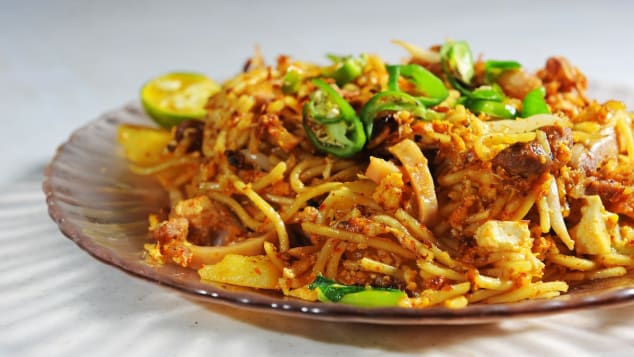
1. Mee goreng mamak


Mee goreng mamak.
courtesy tourism malaysia
This Indian Muslim dish is the complete package. Yellow noodles. Beef or chicken. Shrimp. Soy sauce, veggies and eggs. A bit of chili tossed in for an irresistible jolt.
Sounds simple, right?
Sadly, you can try to replicate this one at home, but it's just not going to taste the way it did when you chowed down at that gritty Malaysian hawker stall.

2. Apam balik


This is the ultimate Malaysian pancake.
Courtesy Yun Huang Yong/Creative Commons/Flickr
You haven't truly experienced Malaysian food until you thrill your taste buds with this sweet treat.
A pancake-style snack wedded with the compact package of an omelet, apam balik is stuffed with more than a sufficient amount of sugar, peanuts and the occasional sprinkle of corn -- it's a dish that's constantly being reinvented.

3. Nasi kerabu


Don't let the blue rice put you off.
Courtesy Yun Huang Yong/Creative Commons/Flickr
If the blue rice doesn't spark your curiosity, the lines of people around the country waiting to order this favorite Kelantanese dish should.
From the state of Kelantan in northern peninsular Malaysia, nasi kerabu gets its eye-grabbing color from telang flowers, which are crushed and mixed into flour.
The aquamarine dish is topped with bean sprouts and fried coconut, then drenched in spicy budu, a fermented fish sauce. In true Kelantan style, you use your hands to dig into this one.


4. Ayam percik (chicken with percik sauce)


Delicious chicken.
Courtesy Alpha/Creative Commons/Flickr
KFC's popularity in the region (and across Asia) over other fast food chains won't surprise those familiar with ayam percik.
Basically, it's barbecued chicken slathered in spicy chili, garlic and ginger sauce mixed with coconut milk. With the right amount of percik sauce, this staple Malaysian stall food packs more zing than anything the Colonel can muster.

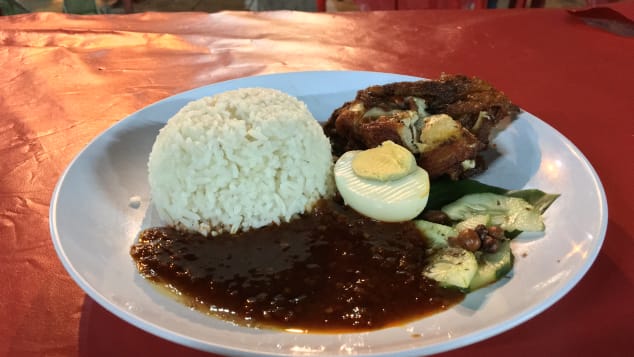
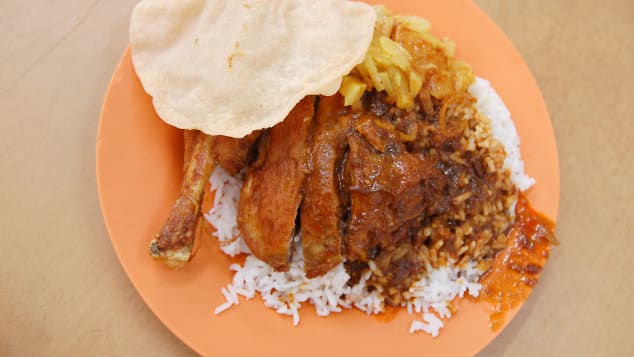
5. Nasi lemak


Nasi lemak -- food of a nation.
Dan Tham/CNN
Some call nasi lemak Malaysia's unofficial national dish. Everyone else calls it delicious.
Nasi lemak is basically rice cooked in coconut milk. But it's the sides that matter.
Depending on where you are in Malaysia, it comes with a variety of accompaniments such as hard-boiled egg, peanuts, vegetables, lamb/chicken/or beef curry, seafood and sambal (chili-based sauce).
Nasi lemak is traditionally eaten for breakfast but these days people are ordering it any time of day.

6. Roti john


A Muslim trader prepares a Roti John during a Ramadan bazaar in Kuala Lumpur.
Rahman Roslan/Getty Images AsiaPac/Getty Images
Whoever John was, it's apparent that he preferred his sandwiches made with grilled minced meat and egg in the middle of slim bread, and drowned in a confection of condiments.
Mayonnaise, ketchup, barbecue and chili sauce -- choose one or choose them all.

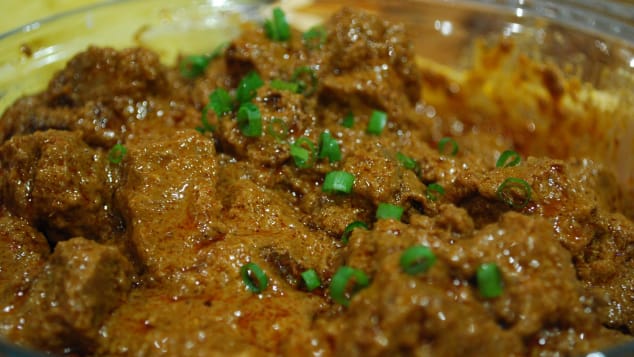
7. Rendang (beef, chicken or lamb)


It's not a curry, OK?
Courtesy Alpha/Creative commons/Flickr
Though sometimes erroneously called a curry, Malaysian food aficionados point out that this chunky cauldron of coconut milk and spices is nothing of the sort.
The difference is in how it's prepared: slowly simmered (to let the meat absorb the spices) until the rosy liquid completely evaporates. A favorite, especially during festive seasons, rendang is found across Malaysia.

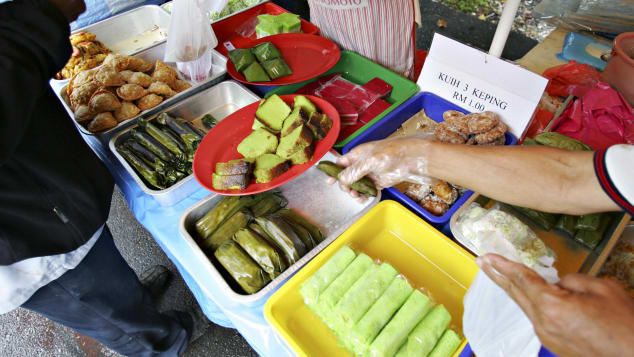
8. Kuih


Kuih is one of Malaysia's favorite desserts.
TENGKU BAHAR/AFP/AFP/Getty Images
Variety, variety, variety -- that's way to explore kuih, or Malay-style pastries. Small enough to snap up in a gulp and sugary enough to give you a modest jitter, kuih vendors are the most colorful stalls of all.
This kaleidoscope of soft, sugary morsels goes quickly -- few pieces are left by the time daylight begins to fade.

9. Nasi kandar


Nasi Kandar is easy to make and tasty too.
Courtesy amrufm/creative commons/flickr
Nasi kandar is essentially rice served with your choice of toppings, which commonly include curry, fish, egg and okra. Everything is laid out buffet style, though you can also order a la carte.
Found all over Malaysia, nasi kandar eateries are extremely popular, most open 24 hours and run by ethnic Indian Muslims.


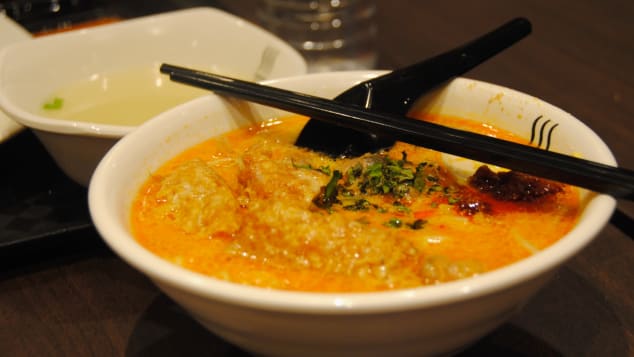
10. Laksa


Laksa: Malaysia's greatest export.
Courtesy LWYang/Creative Commons/Flickr
A staple of Malaysian cuisine, laksa eateries have been migrating abroad, making appearances in Bangkok, Shanghai and further afield.
There are multiple variations. For anyone who enjoys a taste of the volcanic kind, this spicy noodle soup can get you there in its curry form.
Some like it with fish, others prawns.
Our favorite is Penang's asam laksa, in which tamarind features heavily ("asam" is Malay for tamarind) to create a spicy-sour fish broth.
Related contentIndian food: The best dishes in each region

11. Popia basah (wet spring roll)

A hefty sort of spring roll, popia basah speaks to those in need of the familiar crispy snack, but without the added oil.
Not to be confused with wet rolls found in parts of Vietnam, popia basah comes complete with its own regional-specific flavor. In place of lettuce, the Malay wet spring roll has turnips, fried onions and bean sprouts.

12. Bubur (porridges)

Bubur vendors are easy to spot. They're the stall with the giant steel pots and matching ladles.
The contents of these coconut milk-based, sometimes sugary soups include a medley of vegetables and meats, and even dyed balls of flour and coconut milk. There's no standard recipe in preparing bubur -- different regions boast their own specialty.

13. Roti jala


Curry and crepe make the perfect foodie couple
Courtesy Alpha/Creative Commons/Flickr
Roti jala, or net bread, gets its name from the net-like formation that's created by making zigzagging lines with flour on a large skillet.
The final product is folded up like a crepe and usually served with chicken curry. Roti jala is eaten any time of the day.

14. Cendawan goreng (fried mushrooms)

Deep-fried fungus doesn't get better than this. One version, cendawan goreng, is typically peppered with chili or barbecue seasoning, giving it its own sass.
Eaten as an appetizer or snack, with a meal or while on foot, this one will have you imagining what else you can fry -- and how else it can be seasoned.

15. Sambal udang

Sambal udang is a Peranakan dish, created by descendants of 15th-and-16th-century Chinese immigrants.
The Baba Nyonya people, also known as Peranakan or Straits Chinese, are mainly of Chinese descent, originally from Fujian province in southeastern China. They settled along the coast of Malaysia mainly in Penang and Melaka, as well as parts of Thailand, Singapore and Indonesia. These days, they're famous for their incredible food.
A popular Peranakan dish, sambal udang is all about prawns. Whole prawns are sent swimming into a delicious pool of sambal -- chili paste -- that's flavored with prawn paste. The addition of tamarind juice gives it a tangy kick.


16. Murtabak


Murtabak will fill you up.
Courtesy Muhammad Ashiq/Creative Commons/Flickr
This pan-fried bread stuffed with minced meat and onions and dipped in spicy sauce is a meal and a half, only recommended to the famished.
Perfect murtabak is made with a robust amount of minced meat, so that the taste comes through on the first bite. So spicy-sour it'll make your tongue curl!

17. Asam pedas

Nazlina Hussin, founder of the popular Penang cooking school Nazlina Spice Station, says it'd be outrageous not to include asam pedas on any short list of her country's best foods.
A fish curry popular throughout peninsular Malaysia, it's commonly made with freshwater fish or stingray.
Asam, which means tamarind, features heavily, along with ginger, shrimp paste, garlic, chilies and other herbs.

18. Lemang

Eaten with a meat or vegetable dish, lemang is glutinous rice mixed with coconut milk, which is cooked in bamboo.
The time-consuming process to make lemang starts by lining hollowed-out shoots with banana leaves. The bamboo is left over a fire to slowly cook the rice in a process known as tapai.
The result is sticky, wet rice that can, and regularly does, make a nice substitute for its plain Jane counterpart.

19. Otak-otak

Perhaps named by someone with an offbeat sense of humor, otak-otak translates as "brains" in Malay -- but it gets this graphic moniker from its appearance, not its taste or ingredients.
This fish paste mixture of spices and diced onions is loosely wrapped in a banana leaf and barbecued over charcoal until the pinkish contents become warm and the leaves are slightly charred.
No fuss or frills when it comes to eating -- picking at it straight from the leaf is the only way to do it.

20. Tepung pelita

A kind of kuih (Malay-style pastry), tepung pelita easily takes the cake when compared with its post-dinner relatives. At some point just about everyone has overindulged in this two-layered coconut milk-based sweet.
On the top layer, thick coconut milk with salt; on the bottom, a similar milky liquid mixed with sugar and pandan leaves to turn it green.
Served in bite-sized pandan leaf bowls, the packaging of tepung pelita makes it easy to fulfill those gluttonous desires.
Related content50 of the world's best desserts


21. Rempeyek

Few snacks come saltier, or more gratifying, than rempeyek. This top Malaysian food is commonly made by deep frying a doughy batter into a thin brittle and topping it with peanuts and anchovies.
The amount of salt can vary and there are variations that use dried shrimp or garlic instead of anchovies.

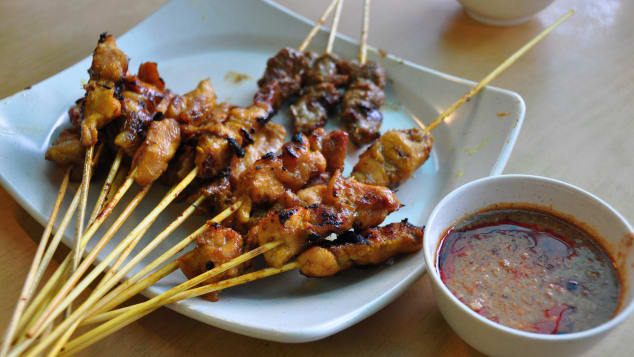
22. Satay


Meat on a stick. When does this concept not work?
Courtesy Marufish/Creative Commons/Flickr
Though considered by many to be a dish native to Thailand, satay is actually believed to have originated in Indonesia. Origins aside, can we all just agree that meat on a stick is good?
Malaysia has its own variations of the grilled skewers, served nationwide in chicken, beef or pork forms (the latter in non-Muslim venues only).
Sauces vary from region to region, including the peanut sauce that's loved the world over.


23. Rojak

Rojak ("mixture" in Malay) is essentially a fried dough fritter with fruits and veggies, though there are regional variations.
But vegetarians shouldn't get their hopes up. The whole mixture is combined with Malaysia's ever-popular shrimp paste. It's the perfect combination of sweet, spicy and sour.

24. Putu piring

Like roti jala, putu piring is enjoyed in India and Malaysia.
Putu piring has the taste of a cake, with the added bonus of pockets of palm sugar. It's plate-like shape is formed by flattening the flour before covering it in a white cloth and placing it in a conical steamer.

25. Satar

If otak-otak is the hodge-podge, hot dog variety of grilled fish, then satar is its more refined cousin.
At one bazaar in Kelana Jaya, Malaysia, a vendor has set up what he calls "mackerel-filled food from the east coast." Roasted in a banana leaf, the process and look are a Photostat of otak-otak, but with more fish, less spice and larger portions.

26. Roti canai

An Indian-inspired flatbread, roti canai is made with flour, butter and water, though some will toss condensed milk in to sweeten it up.
The whole concoction is flattened, folded, oiled and cooked on a heavily oiled skillet, resulting in a sublimely fluffy piece of bread with a crispy exterior. You can eat this one as a snack on its own or use it to scoop up a side of curry.


27. Mee rebus

In case you haven't noticed, Malaysia has done a lot with the simple Chinese noodle.
Another one to set your taste buds into party mode, mee rebus is made with blanched yellow noodles drowned in an insanely addictive curry-like potato-based gravy and spices like lemongrass and ginger.
It's similar to mee goreng. Common proteins added to the mix include prawns, mutton and dried anchovies. Garnishes include lime, spouts and halved boiled eggs.


28. Gulai ayam kampung

This chicken curry dish can be cooked in a number of ways. For instance, in the "village" style, traditional herbs and potatoes are tossed in.
The best thing about gulai ayam is the smell. Turmeric and kaffir lime leaves, plus lemongrass, give it an irresistible aroma. Palm sugar and coconut paste add that extra oomph to knock your socks off.

29. Lor bak

A Nyonya specialty of Penang, lor bak is braised pork that has been marinated in five-spice powder before being wrapped in soft bean curd skin and deep-fried.
Lor bak is served with two dipping sauces, a spicy red chili sauce and a gravy thickened with cornstarch and a beaten egg called lor.


30. Ikan bakar


A fish dish you won't forget.
Melanie Wood/CNN
The direct translation of this dish means "burned fish."
You shouldn't let that turn you off. This is one tasty grilled bit of seafood.
After being marinated in the all-important sambal, the fish is placed on a banana leaf and grilled over a flame. Great for sharing.


31. Char kuey teow

We asked author and chef Norman Musa, one of Malaysia's most famous exports, which dish he'd be outraged not to see on a list of the country's top dishes. This is the one.
Another one to thank China's migrants for, char kuey teow --- made with flat rice noodles --- is one of Southeast Asia's most popular noodle dishes.
The noodles are fried with pork lard, dark and light soy sauce, chili, de-shelled cockles, bean sprouts, Chinese chives and sometimes prawn and egg. Essential to the dish is good "wok hei" or breath of wok, the qualities and tastes imparted by cooking on a wok using high heat.
Related contentFrom chow mein to udon: A beginner's guide to Asia's best noodles


32. Chai tow kway

In this dish, rice flour and grated white radish is mixed and steamed into large slabs or cakes.
These are cut up into little pieces and fried with preserved turnip, soy sauce, fish sauce, eggs, garlic and spring onions.
You can have it "white" or "black" (with sweet dark soy sauce added). Also known as fried carrot cake or chye tow kueh, this grease-laden belly warmer is available at many hawker centers.

33. Goreng pisang

The popular Malay snack of goreng pisang (banana fritters) is one of those dishes that has variations in banana-growing countries around the world.
The deep-frying helps caramelize the natural sugars in the bananas, making them even sweeter than they were to begin with. Some of Malaysia's Chinese versions have unusually delicate and puffy batter.

34. Chicken curry kapitan

This isn't an ordinary curry. A Peranakan dish, chicken curry kapitan has a tangy flavor made from tamarind juice, candlenuts, fresh turmeric root and belacan (shrimp paste.)
As for the name, kapitan was the title of an Indian or Chinese leader in Penang. Legend has it a kapitan once asked his cook "what's for dinner tonight?" The chef replied, "Chicken curry, Kapitan!"

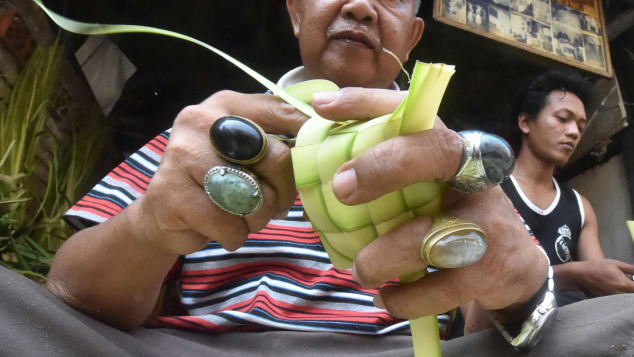
35. Ketupat


Weaving a little basket of goodness.
BAY ISMOYO/AFP/Getty Images
It would be a crime against the dumpling gods to leave this fancy little package off a list of Malaysia's top foods.
More of a side than a main dish, ketupat comes in several varieties. Basically, it involves weaving a pouch made of palm leaves around a handful of rice. The rice expands and compresses, resulting in a neat little bundle you can dip in your curry or rendang.


36. Jeu hoo char

Another Peranakan great -- we could easily put together a list of 40 delicious Peranakan dishes -- this salad features a finely shredded mixture of stir-fried carrots, onions, mushrooms, pork and cuttlefish.
This dish is particularly popular during festivals -- especially Chinese New Year.

37. Kaya toast


This puts your regular buttered toast to shame.
Courtesy T.Tseng/Creative commons/Flickr
Kaya is a sweet and fragrant coconut custard jam, slathered onto thin slices of warm toast with ample butter. It's as divine as it sounds, particularly when downed with a cup of thick black coffee.
Many locals have this for breakfast supplemented by two soft-boiled eggs with soy sauce and pepper.

38. Ais kachang

Shaved ice desserts are always a popular treat in the tropics.
Ice kachang (ice with beans) evolved from the humble ice ball drenched with syrup to be the little ice mountain served in a bowl, drizzled with creamed corn, condensed milk, gula melaka and brightly colored syrups.
Dig into it and you'll discover other goodies hidden within -- red beans, palm seeds and cubed jellies.

39. Air tebu

While inhabitants of some regions in Asia prefer to gnaw on sugar cane (China and Vietnam, for instance), others take a more refined approach when it comes to extracting the sweet nectar within.
Much of the smoke wafting through Malaysia's bazaar crowds comes from pots of boiling, frying liquid, but a significant portion also originates from the engine of a sugar cane grinder.
Stalks are fed into industrial-sized juicers; the liquid is collected and served by the bag and bottle. There's no dearth of syrupy drinks on offer, but air tebu is the only one that comes with a show.


40. Wonton mee


Wonton mee. China's great gift to Southeast Asia.
Tsim Chai Kee
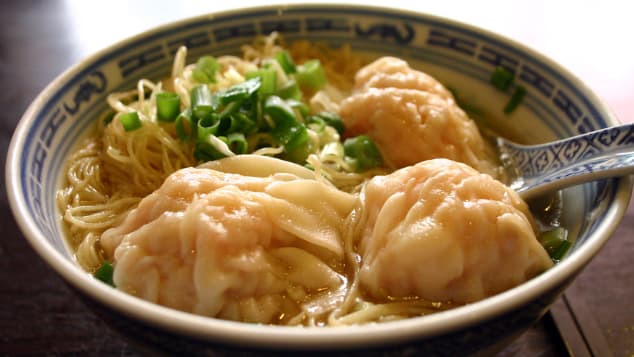
You'll find variations of wanton mee, a dish of Chinese origin, all over Asia, but the one in Penang stands out.
Springy egg noodles are served al dente with a sticky sauce made from soy sauce and lard oil. A spoonful of fiery sambal is added to the side.
It's topped with pieces of leafy green Chinese kale, sliced green onions, pickled green chilies and wontons. The wontons are either boiled or steamed, as you'll find them elsewhere in Malaysia, or fried, in a unique Penang twist.
Special thanks to author and restaurateur Chef Norman Musa, cooking school owner Nazlina Hussin and the other Malaysian locals who helped compile this list by sharing their favorite dishes, cooking tips and explanations.
Editor's note: This article was previously published in 2013. It was reformatted, updated and republished in 2017 and again in February 2021.
Posted by blog at 5:45 AM No comments:
Email ThisBlogThis!Share to XShare to FacebookShare to Pinterest
Labels: Healthy & Happy Life, Healthy Foods

Wednesday, February 10, 2021

The Top Health Benefits of Dates, Explained


When you hit the supermarket to restock your kitchen with nutrient-packed fruit, you probably unconsciously turn your cart into the produce section, where apples, oranges, and grapes abound. But in doing so, you could be missing out on a fresh fruit hiding out next to the raisins and prunes in the bulk bin aisle: dates.

That's right: Though wrinkly, sticky, and chewy like dried fruits, naturally sweet dates are typically sold in their raw, fresh state, says Keri Gans, M.S., R.D.N., C.D.N, a dietitian and Shape Brain Trust member. At the grocery store, you’ll often find two types of dates, which have slightly different textures and tastes but similar nutritional values: Medjool, a soft date variety with a high moisture content and a sweeter flavor, and Deglet Noor, a semi-dry date variety that contains very little moisture and has a nutty finish. And with those craveable qualities come a few health perks.

Here, the date nutrition facts you need to know, plus expert-approved ways to add them to your plate.

Dates Nutrition Facts


For a tiny fruit, dates are teeming with vitamins and minerals, including (but not limited to!) iron, potassium, magnesium, and B vitamins. And while they're high in calories and carbs, they're full of good-for-you fiber. Boasting nearly 2 grams of fiber per serving, dates can help promote healthy digestion and bowel movements. These prune-looking fruits are also full of disease-fighting antioxidants, such as flavonoids and phenolic acids — both of which have been shown to reduce inflammation in the body — but more on all this in a sec.

Here's a quick nutritional profile of one pitted Medjool date (~24 grams), according to the United States Department of Agriculture:
66.5 calories
0.4 grams protein
0.04 grams fat
18 grams carbohydrate
1.6 grams fiber
16 grams sugar

Health Benefits of Dates

Provide Tons of Fiber

The biggest health benefit dates have going for them is their fiber content. In roughly four Medjool dates, you’ll score 6.7 grams of fiber, or a quarter of the 28-gram recommended daily allowance, according to the USDA. Remember, fiber is the part of plant foods that can’t be digested or absorbed, so it helps bulk up your stool and ensure everything passes through your gut smoothly, according to the Mayo Clinic. Plus, fiber can help lower cholesterol levels, stabilize blood glucose levels by slowing the absorption of sugar, and boost digestive health, says Gans. So if you’re looking to regulate your number twos, this fruit is definitely for you. (To add even more fiber to your diet without overhauling your plate, try putting these sneaky tactics into action.)

Promote Heart Health


Bananas may be the go-to source of potassium, but they’re not the only fruit that can help you fulfill your daily quota. Munch on four Medjool dates, and you’ll snag 696 mg of potassium, about 27 percent of the USDA’s recommended adequate intake of 2,600 mg per day. This mineral not only helps your kidneys and heart function properly, but it also plays a key role in regulating blood pressure, according to the National Institutes of Health.


ICYDK, high sodium intake is linked with high blood pressure (when the force of the blood hitting your artery walls is greater than normal). If the pressure stays high over time, it can lead to heart attack, stroke, or heart failure. But luckily, when you consume potassium, your blood vessels widen and you excrete more sodium through your urine, both of which can help lower blood pressure, according to the NIH. (Related: The Most Common Causes High Blood Pressure, Explained)

Strengthen Bones


Dates may not offer too much of the superstar bone-boosting nutrients — you know, calcium and vitamin D — but they do contain manganese and magnesium, which also keep your bones strong and healthy, says Gans. Both of these nutrients play a role in bone formation, according to the NIH, and studies have shown that upping magnesium intake can improve bone mineral density, which can minimize your risk of breaking a bone.

Still, four Medjool dates provides just 17 percent of the RDA for magnesium and 16 percent of the recommended adequate intake for manganese, so you’ll likely need to add other sources of those nutrients to your diet in order to fulfill those USDA recs. In order to get your fill of magnesium, nosh on pumpkin seeds, chia seeds, or almonds, too. To hit your quota for manganese, munch on hazelnuts or pecans. Or try whipping up a hearty bowl of oatmeal (which the NIH lists as one of the top sources of manganese) topped with a few of those fixings *and* dates to get enough of both nutrients in a totally delicious way.

Boost Your Immune System


Along with key vitamins and minerals, dates are a good source of antioxidants, compounds that can help combative oxidative stress caused by free radicals (harmful molecules that, in excess, can damage cells and increase oxidative stress). When these free radicals build up in cells, they can harm other molecules, which may increase the risk of cancer, heart disease, and stroke, according to the National Cancer Institute. What’s more, antioxidants have been found to improve immune system functioning by fighting off those harmful free radicals, according to an article in the journal Immunopathologia Persa. (Related: How Exercise Can Boost Your Immune System)

“The question here is how many dates you would need to eat to get a significant amount of antioxidants,” says Gans. “So if you’re eating dates solely for those antioxidant benefits, I think there might be better food choices. But if you're using dates in place of regular table sugar, then you might be getting a little bit of an added nutritional bonus in terms of antioxidants.” All that’s to say that, in addition to adding a few dates to your plate, consider regularly snacking on other antioxidant-rich foods, such as blackberries, walnuts, and strawberries, to strengthen your immune system — and maybe even fend off a nasty cold.

Work As a Healthier Sweetener


Okay, this isn’t technically a health benefit of dates, but it’s definitely a perk worth mentioning. A single Medjool date contains a whopping 16 grams of sugar, so the fruit's ideal to use in place of standard table sugar, says Gans. (ICYDK, table sugar is a type of added sugar that, when consumed in excess, can lead to type 2 diabetes and heart disease, according to the Centers for Disease Control and Prevention.)

While that number may still seem pretty big, Gans stresses that it’s nothing to be too concerned about. “When you’re eating fruit, you’re going to get sugar,” she explains. “But it’s naturally occurring, so along with that sugar comes the other health benefits that are in the actual fruit.” On the flip side, the standard white sugar you'd typically add to your brownies and energy bars is totally void of good-for-you nutrients, she adds. (P.S. here's a breakdown of the difference between artificial sweeteners and real sugar.)

How to Get *All* the Health Benefits of Dates


With all the health benefits of dates, the fruit may seem like the next ~superfood~. But they do come with one major drawback: Their high calorie content. A single Medjool date contains 66.5 calories, while a comparable serving of green seedless grapes has just 15.6 calories, according to the USDA. “Yes, dates are good for you, but don’t want to nosh on them like you would some other fruit because that will likely be too high in calories,” says Gans.

So if you’re planning on adding dates to your snack-time routine, consider capping your intake to just three dates, or about 200 calories’ worth, at a time, says Gans. “However, normally I wouldn’t suggest just a carbohydrate like that as your snack,” she adds. “I would stick to two dates and then add 100 calories of pistachios or almonds, or you could have a string cheese.”

While simply munching on the fruit raw can help you reap the health benefits of dates, don’t be afraid to get creative with your consumption. Chop a few up and mix them into a quinoa or barley salad for a few tiny punches of sweetness or stuff them with peanut or almond butter for a dessert free of refined sugar. Better yet, drop a date or two in a blender with fruit and milk for a smoothie or add them to your batch of energy balls, suggests Gans. In any case, using dates in place of sugar will amp up your dish's level of sweetness *and* nutrition.

Remember, you won’t reach all your nutritional goals simply by eating a few dates a day, but they do provide some essential vitamins and minerals (unlike refined sugars), she adds. And as the cliché goes, every little bit helps.
Posted by blog at 11:38 AM No comments:
Email ThisBlogThis!Share to XShare to FacebookShare to Pinterest
Labels: Health & Nutrition, Healthy & Happy Life, WORLD OF TRUTH

Monday, February 8, 2021

Why a wellness routine is your top priority amid protests and the pandemic — and how to start

(CNN)As states gradually reopen even as the pandemic wears on, many of us are concerned about our health and well-being. Especially now, with some continuing to stay at home and social distance while others join the throngs at nationwide Black Lives Matter protests, it may even be a priority.

From state to state, the loosening of restrictions vary, and within our local communities, the reality is that not only do people have different ideas on what constitutes social distancing but for many others still, in the face of racial inequality, the desire to create social change far outweighs the potential risk of spreading or catching the virus.
It's all the more reason to make sure we're taking the best care of ourselves to fortify against the disease. But while living a healthy life may be a desired goal, how to achieve it is another story.
    Even if you're someone whose healthful habits were perfected to a tee during pre-pandemic times, you may find yourself struggling to engage in even the most basic self-care in these increasingly unpredictable days.
    That's where a wellness routine can come in handy.
    I'm not talking about a spa escape every so often or even regular massages or chef-prepared meals (though all of that may sound really nice). I'm talking about creating your own personalized routine that will benefit you physically and emotionally, one that simply requires a regular commitment to yourself.
    Creating a wellness routine allows you to shift from diet culture and adopt healthy habits that easily fit into your daily lifestyle. What's more, having a routine allows you to focus on health goals by creating structure and organization, which can be particularly beneficial when things seem out of your control, like life during an unprecedented pandemic and simultaneous upheaval as people fight against social injustice.
    In fact, predictable routines, or ritualistic behavior "developed as a way to induce calm and manage stress caused by unpredictability and uncontrollability, heightening our belief that we are in control of a situation that is otherwise out of our hands," according to researchers at Tel Aviv University.
    "We need an internal structure because our external lives have become totally unstructured — and that triggers anxiety and stress," said Robin Foroutan, a New York City-based integrative medicine dietitian and spokesperson for the Academy of Nutrition and Dietetics.
    "In the beginning, we thought this was going to be a little break; a couple of short weeks, and then we'd resume life as we knew it. Now we know that probably is not going to be the case. We don't know how long this will last, but we can find ways to stay steady and structured on the inside amidst the chaos outside."
    Engaging in a wellness routine with a focus on good nutrition, exercise, sleep and stress management can boost our health and well-being and strengthen our immunity during a time when we may need it most.
    And while social obligations, travel and other commitments typically make it challenging to start new habits, being stuck at home without these distractions provides an opportune time to start creating a wellness routine that is accessible, doesn't require a lot of money and is something that you can count on during this uncertain time — and in the future, too.


    How to create a wellness routine

    Health experts say it's important to create a manageable routine that you can stick with as part of a lifestyle — not something overly ambitious that you can't sustain. One way to do that is to start small and build upon it, as you feel comfortable.
    Here are some tips to get started in creating your personal wellness routine.

    Set regular times for sleeping, eating and exercise

    "Most people feel better when they are going to bed and waking up at consistent times, eating regular meals and snacks and getting a steady dose of exercise, said Marysa Cardwell, a registered dietitian, nutrition therapist and certified personal trainer based in Salt Lake City, Utah.
    For sleep: Everyone's sleep schedule is different, and that's OK, as long as you stick to your natural circadian rhythms, experts say. That means going to sleep when the sun is setting (or a bit later) and waking up when sun is rising (or a little later, according to your individual needs).
    Aiming for seven to nine hours of sleep is key, as it helps to "reduce the stress hormone cortisol and your adrenal load," Cardwell said.
    Getting adequate sleep also bodes well for engaging in other healthful behaviors — by going to bed at a reasonable hour, you'll be less likely to engage in nighttime eating or mindless eating in front of the TV, and you're more likely to wake up early and start exercise, Cardwell explained.
    For eating: Setting regular meal times, and taking a break to eat your food mindfully is key, Cardwell advised, but when you actually eat is up to you. "Some do well on three meals per day with an afternoon snack; others prefer three smaller meals and three snacks."
    Regardless of the pattern you choose, aim to eat at least every four hours, which prevents blood sugar from crashing and can lead to overeating. For example, if you're eating three meals and one afternoon snack, you might choose to eat breakfast at 8 a.m., lunch at 12 p.m., a snack at 4 p.m. and dinner at 7 p.m.
    Taking a few deep breaths, enjoying the wonderful smells of the food you are about to eat and chewing food really well can all help make mealtime a healthful ritual, Foroutan explained.
    Additionally, dinnertime can become a daily social ritual by sharing the meal with family or friends, advised Jen Scheinman, a Denver-based registered dietitian nutritionist and owner of Jen Scheinman Nutrition, a virtual nutrition coaching practice. "Even a Zoom dinner with a friend if you're by yourself can help you feel connected."
    For fitness: Pick a time that you're most likely to stick with. That might mean taking a morning walk before your day gets started, or scheduling your favorite fitness class on your calendar so you won't forget.
    "I shut my day down with a run or yoga at around 5:30 p.m. That's my last thing for the day. The more you can make it a routine, the less you have to think about it," Scheinman said.

    Plan for food, fitness and sleep

    Planning what you will eat and how you will exercise means that you are more likely going to do what you intend to do, which will ultimately help you achieve your health goals. For example, planning meals in advance means you'll be less likely to reach for quick sugary snacks when you run out of energy. It also helps to limit shopping trips.
    "Not only does planning your meals ahead of time help cut down on the number of times you're going to the grocery store, but it can also help reduce food waste and ensure you have meals that were intentionally picked to fit your nutritional goals," said Denver-based registered dietitian nutritionist Kelli McGrane.
    For food: Eating a nutrient-rich breakfast sets the stage for making other healthful choices throughout the day.
    Choose protein-rich breakfasts like egg whites, cottage cheese or smoked salmon on a bagel; Greek yogurt, smoothies with low-fat milk, high fiber cereals with milk or peanut butter on whole wheat toast.
    Scheinman recommended preparing breakfast foods ahead of time, like making overnight oats with milk. "It makes the breakfast routine less daunting."
    For lunch and dinner, Cardwell encouraged a fist-size portion of protein, such as fish, chicken or beans; a fistful of carbohydrates like whole wheat pasta or brown rice; and a half plate of veggies. This will help meet your micronutrient needs, as well as fiber. Use fats sparingly, as a condiment, to make your food taste better, but limit fried foods and saturated fat, Cardwell advised.
    For snacks, choose protein and carb combos, like cheese with crackers, sliced fruit with peanut butter, nuts and seeds with dried fruit or Greek yogurt. Pairing protein with carbs "helps keep your blood sugar level stable, and helps you stay fuller longer," Cardwell said.
    Scheinman recommended using the weekends for batch cooking, like making chili or soups, which you can freeze to enjoy later in the week. Washing and chopping veggies and fruit during the weekend can also save you time during the week.
    For fitness: Pick a fitness activity that inspires you — and is doable. There are a lot of fitness apps offering free trials and online Zoom fitness classes, so you can use this time as an opportunity to try something new. Cardwell recommended aiming for at least 30 minutes per day, if possible.
    If you are looking for a simple at-home cardio workout, MaryAnn Browning, founder and CEO of Browningsfitness in New York, recommended jumping jacks, high knees, butt kicks, burpees and switch jumps — during which you'll jump to turn 180 degrees and then back again — for 15 seconds each. Then repeat the circuit five to 10 times, depending on what you can handle.
    For at-home fitness essentials, Browning recommended getting a set of yellow, green and red resistance bands, which can be used for back, bicep, triceps, shoulders and leg work. She also recommended looped bands to go around the calves or thighs, which strengthen the glutes and can help prevent knee and back injuries.
    If you want to weight train but don't have equipment, anything that will give you muscle tension will be beneficial, such as jugs of water, books or even your children. "I use my kids — I'll do planks and have them sit on me ... or I'll do leg presses while letting them do airplane," Cardwell said.
    And don't forget to keep moving throughout your day. Tracking apps like Lose It! are a good way to see how normal daily activities can all count toward our daily fitness goals.
    "Dancing with your kids or partner, yard work, house projects, sex and cleaning are all trackable activities. Doing these activities with intention and extra vigor all count towards a healthy lifestyle," said Cardwell, who is also a contributing dietitian for Lose It!
    For sleep: Engage in a bedtime routine where you can quiet down and prepare for sleep. "Turn off electronics, including the TV, iPad, and cell phones an hour before bedtime," Scheinman advised. This helps to reduce exposure to blue light, which "the brain perceives as daylight, so your brain is not quite getting the signal that it's nighttime and melatonin is not produced."
    Unplugging also prevents you from checking one more email or scrolling through social media while in bed, which can be stimulating and interfere with sleep, Scheinman explained.

    Other tips for a successful wellness routine: a morning ritual and self-care

    Most experts recommended engaging in a morning ritual that brings you pleasure. "Starting your day with the same routine each morning can bring steadiness and calm to the rest of the day. You are starting from a more grounded and positive place, versus waking up; grabbing the phone and checking the news and getting stressed out," Foroutan said.
    "The morning is a nice time to start integrating things you didn't have time for previously — like taking the dog for a longer walk in the morning, making a nice cup of coffee you can sit and enjoy or engaging in a meditation practice," Scheinman added.
    "It sets the day off with a healthy intention, with a sense of comfort. ... I know this is what I do," Scheinman said.
    Foroutan enjoys waking up and writing down three things she is grateful for. "Starting the day with a thought about gratitude can be really centering. Writing it down does something extra — it solidifies the thought and intention. Not every day is good but there's something good in every day. Even if it's one small thing that gives you a sense of gratitude — that's really grounding and it can help shift your perspective."
    Stretching your body after you wake up or doing a sun salutation can help to get your blood flowing and your body moving in the morning.
    It's also important to prioritize self-care. "Make stress relievers like enjoyable activities a non-negotiable right now," Cardwell said. That may include knitting, taking an extra-long shower or bath, reading, taking a tea break, enjoying a glass of wine or calling family members. Even better, schedule these stress relievers into your day just like mealtimes and other obligations.
      "We're taking stock of what's important ... and [our] health is important. Doing these things now can help you deal with the stress of right now," Cardwell said.
      It can also keep you healthy and feeling good well into the future, too. That's a gift from quarantine life if there ever is one.

      Lisa Drayer is a nutritionist, an author and a CNN health and nutrition contributor.

      Posted by blog at 9:11 AM No comments:
      Email ThisBlogThis!Share to XShare to FacebookShare to Pinterest
      Labels: Health & Fitness, Healthy & Happy Life, Healthy & Happy Lifestyle

      Foods that can reduce stress

       Stress levels may be high these days, but did you know that what we choose to eat can help to reduce stress, ultimately allowing us to take charge of our mental health?

      "Instead of thinking of food as 'stress eating' or 'guilty pleasures,' we can think of using food to shape the lens in how we experience stress," said psychiatrist Dr. Drew Ramsey, an assistant clinical professor at Columbia University Vagelos College of Physicians and Surgeons and author of the upcoming book "Eat to Beat Depression and Anxiety."
      Taking control of stress with the foods we eat can help to counter inflammation throughout the body, as well as elevated levels of the hormone cortisol, which can otherwise lead to high blood sugar, increased appetite and weight gain, among other symptoms, according to Felicia Porrazza, a Philadelphia-based registered dietitian who helps stressed-out clients find natural ways to improve their overall wellness.
        Feeling less stressed already? I hope so! Here are some food suggestions to help you live in a state of calm in 2021.


        Open your palate to oily fish

        Try out anchovies, sardines and herring, in addition to salmon, trout and mackerel. These foods are a rich source of stress-busting omega-3 fatty acids known as DHA (docosahexaenoic acid) and EPA (eicosapentaenoic acid), which play an important role in brain health.
        "Increasing omega-3 fatty acids can help to regulate how our bodies handle stress," Porrazza said. Stress can increase inflammation in the body so if we can reduce inflammation by consuming more omega-3s, we could also potentially reduce cortisol levels, which could improve health and wellness, Porrazza explained. In fact, omega 3s help to blunt the cortisol response after acute stress, some research has shown. On the flip side, low levels of omega 3s may affect the function of the HPA, or hypothalamic-pituitary-adrenal, axis, which plays a role in how our bodies respond to stress, according to Porrazza.
        Omega-3 fats might help to reduce the symptoms of clinical anxiety, concluded a recent review and meta-analysis of 19 clinical trials involving over 2,200 participants from 11 countries.
        Consuming high amounts of these fatty acids in fish may help protect us from depression, too, according to other research.
        Need some ideas besides grilled salmon? Try a Caesar salad with an anchovy vinaigrette dressing, or add some herring to your Sunday bagel order.

        Mix it up with shellfish

        Mussels, clams and oysters are rich in vitamin B12 in addition to omega-3s, which are both prominent nutrients in diets connected with lower anxiety, Ramsey explained.
        In fact, B vitamins, including vitamin B12, help to maintain the nervous system, and stress can cause a slight increase in the body's requirements of these B vitamins, explained Martha McKittrick, a New York City-based registered dietitian who provides nutrition counseling and wellness coaching to many stressed-out New Yorkers.
        Vitamin B deficiencies can increase the risk of developing stress-related symptoms such as irritability, lethargy and depression.
        Since vitamin B12 is not produced by plants, if you are vegan, you should ensure that you are consuming vitamin B12 from fortified foods or a supplement.

        Consume more vitamin C

        Foods such as red and green peppers, oranges, grapefruit and kiwi are rich in vitamin C, which in high doses has antidepressant effects and improves mood, and may be helpful in treating stress-related disorders.
        Other research has revealed that vitamin C may help reduce anxiety among high school students.
        To boost your vitamin C intake, aim to include one vitamin C-rich food with a meal, and another for a snack. You could also try one of my favorites: dark chocolate-dipped kiwis or oranges for dessert!

        Choose healthy carbs

        Carbohydrates can help to boost serotonin production in the brain, which is key in influencing our mood. "Serotonin is a neurotransmitter that is responsible for happiness and well-being," Porrazza said.
        Serotonin has a calming effect and also promotes sleep and relaxation, McKittrick explained. In fact, low levels of brain serotonin, research has suggested, can lead to increased vulnerability to psychosocial stress.
        Tryptophan is an amino acid that is necessary for the production of serotonin in the brain. Complex carbs including whole grains and vegetables can help boost levels of serotonin because they make tryptophan more available in the brain.
        Carbs like soybeans and peas also deliver a small dose of protein, which can help to balance blood glucose levels. This benefit is important, since fluctuations in blood glucose can cause irritability and worsen stress levels.
        Additionally, if you eat too many highly processed carbs that are loaded with sugar and lack protein or healthy fats, like cookies and sweets, you can experience blood sugar spikes and crashes, "and that can make you feel more stressed," McKittrick added.

        Fill up on fermented foods

        Fermented foods such as yogurt, kombucha, kefir, tempeh and sauerkraut contain friendly bacteria known as probiotics, which have the ability to reduce stress and cortisol levels.
        In fact, randomized controlled trials featuring probiotics suggest a causal link between the gut microbiota and stress responding.
        Feeling shy? Fermented foods may help reduce symptoms of social anxiety, too, research has shown. These probiotic-rich foods may also help control negative thoughts that are associated with low moods.
        How does it all work? Our gut bacteria produce about 95% of our body's serotonin supply, which can positively affect how we feel, according to Porrazza. On the flip side, stress can increase inflammation and gut dysbiosis, which is basically an imbalance of the gut microbiota, and this can negatively influence mood.
        Other fermented foods include sourdough bread, kimchi, miso and pickles.
        Ramsey fights stress with a kefir-rich banana smoothie. "I get a good dose of potassium from the banana and I add nuts, cinnamon and cacao for its anti-inflammatory properties. It's a great energy and brain boost."
        Bananas are also a source of vitamin B6, which helps in the conversion of tryptophan into serotonin.

        Munch on magnesium-rich foods

        A lot of times when you are stressed out, your magnesium levels can become depleted, McKittrick explained. "If you have a magnesium-deficient diet, it can raise stress hormones, so it is important to eat magnesium-rich foods, like leafy green vegetables, nuts and seeds; legumes; and whole grains," she said.

        Conquer stress with crunchy foods

        "A lot of my clients, when they think about crunchy foods, they think of chips, but sometimes you can manage stress with healthier crunchy foods like celery and carrots with hummus," Porrazza said.
        Cutting up an apple and then munching on it can also release stress, as Porrazza has observed with her clients. "Doing something with their hands can help them take themselves out of their head and give them a little bit of a mindful moment, which can take them out of the stress of the moment," she added.

        Take a tea break

        Green, black and oolong teas are rich in theanine, an amino acid that helps reduce stress and promote calm feelings.
        These teas are also rich in antioxidants, which can help reduce oxidative stress in the body, which helps protect against disease.
        Black tea in particular has been studied for its role in stress recovery and reduction in cortisol levels.
        And while there isn't enough research to show that chamomile reduces stress, the act of sitting and drinking a cup of this herbal tea may be calming for some, Porrazza explained.

        Other stress-busting diet tips

        Lastly, there are a few diet strategies to avoid, in order to feel less stressed. One is to consume less caffeine.
        "Caffeine has effects on the brain and nervous system and can elevate cortisol levels and exacerbate the effects of stress on the body," McKittrick said.
          Because of caffeine's effects, it's important to pay attention to how your body responds to caffeine. "If I am stressed, I can only have half a cup of coffee," 
          And it's important to not go too long without eating. Doing so can cause low blood sugar, which can make you feel more irritable and worsen stress. "It's very individual, but for most I would say don't go more than four to five hours without food -- but pay attention to your own body," McKittrick said.

          Lisa Drayer is a nutritionist, an author and a CNN health and nutrition contributor.

          Posted by blog at 9:04 AM No comments:
          Email ThisBlogThis!Share to XShare to FacebookShare to Pinterest
          Labels: Health & Nutrition, Healthy & Happy Life, Healthy & Happy Lifestyle
          Older Posts Home
          Subscribe to: Posts (Atom)

          Blog Archive

          • ▼  2021 (82)
            • ▼  February (22)
              • Black coffee can be good for your heart, studies show
              • Coke is launching a new bottle size for the first ...
              • How chocolate fell in love with Valentine's Day
              • 12 products that can help you waste less food in t...
              • Burger King is testing a rewards program. Here's w...
              • Malaysia's top 40 foods
              • The Truth About Doing Yoga for Weight Loss
              • What You Should Know About Walking for Weight Loss
              • The Top Health Benefits of Dates, Explained
              • China Mars mission: Tianwen-1 spacecraft enters in...
              • Why a wellness routine is your top priority amid p...
              • Foods that can reduce stress
              • Habits that reduce stress during a pandemic
              • The Conversation logoWhen dogs bark, are they usin...
              • Best kitten food: Six types to give your young cat...
              • HOW TO MAKE HEALTH AND FITNESS A LIFESTYLE
              • One Serving of This Food Can Significantly Increas...
              • 26 Plants You Should Always Grow Side-By-Side
              • One Surprising Side Effect of Eating Apples, Accor...
              • Most popular dog breeds that are good for families
              • Homemade condiments, dressings and toppings are a ...
              • You don't need land to build habitat; here's how t...
            • ►  January (60)
          • ►  2018 (52)
            • ►  July (52)
          • ►  2017 (446)
            • ►  September (18)
            • ►  August (13)
            • ►  July (29)
            • ►  June (171)
            • ►  May (77)
            • ►  April (138)
          • ►  2016 (3)
            • ►  December (3)
          • ►  2015 (344)
            • ►  December (64)
            • ►  October (12)
            • ►  August (3)
            • ►  May (9)
            • ►  April (6)
            • ►  March (38)
            • ►  February (77)
            • ►  January (135)
          • ►  2014 (19)
            • ►  December (19)
          Picture Window theme. Powered by Blogger.