Showing posts with label Healthy & Happy Lifestyle. Show all posts

Sunday, February 14, 2021

12 products that can help you waste less food in the kitchen


Want to fight climate change, save money, go food shopping less often or all of the above? You can start by wasting less food at home. An estimated 40% of food produced in the US goes to waste, and about half of that happens in our very own households. When we toss out our food, most of it ends up in the landfill, where it rots and produces methane, a greenhouse gas that contributes to Earth’s rising temperature.

One of the keys to reducing food waste is learning how to keep food fresher for longer. There are plenty of tricks that require no buying at all (more on that below) as well as some helpful products that can help you cut down on your plastic waste while keeping your food pristine in the process. And, if you want to think about it in these terms, wasting less food ultimately means wasting less money. Here are some things that can help you get started:
Stasher Reusable Silicone Food Bags, 2-Pack ($21.49, originally $23.98; amazon.com)
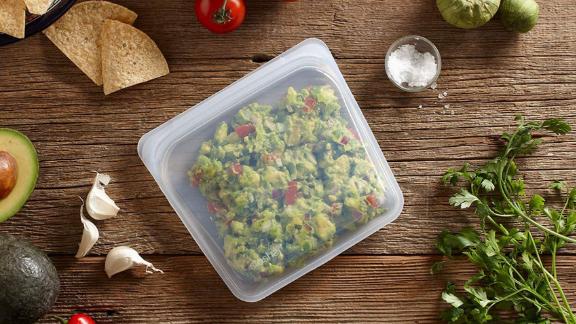
PHOTO: Amazon
Stasher Reusable Silicone Food Bags, 2-Pack


Goodbye, plastic baggies; hello, Stasher. This cult-favorite reusable, resealable bag comes in a number of sizes and does way more than a standard sandwich bag. If you haven’t yet discovered Stasher, well, it’s time to get familiar with the meal-prep standout. These silicone-based containers can be stored in both the fridge and freezer; are dishwasher-, oven- and microwave-safe; and can even double as a sous vide.

“They seem to keep food fresher longer in the refrigerator than typical plastic bags,” says registered dietitian Kaleigh McMordie, founder of Lively Table, who loves using these bags to reduce her plastic waste.

If your Stasher bag somehow gets damaged, the company even encourages you to send them back so they can repurpose the materials and build safe playgrounds for kids.
Bee’s Wrap, Set of 3 ($18; amazon.com)

PHOTO: Amazon
Bee's Wrap, Set of 3


You wouldn’t keep a brick of cheese unwrapped in the fridge (right?!), but you don’t have to use plastic wrap to ensure it says fresh. Consider these Bee’s Wrap food wraps a sustainable alternative to single-use plastic or foil for food storage. These washable, durable sheets last up to a year and seal food for freshness in the fridge, when everything cools. When they do reach their end, they’ll leave no trace, as they can be fully composted.
FineDine 24-Piece Superior Glass Food Storage Containers Set ($39.99; amazon.com)
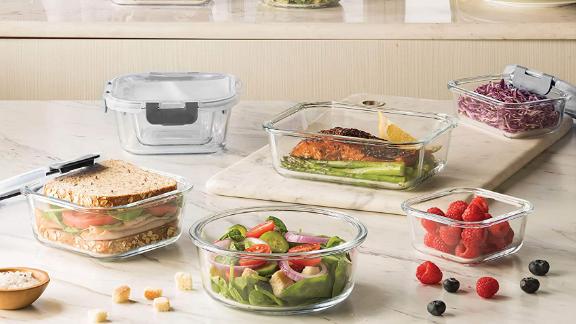
PHOTO: Amazon
FineDine 24-Piece Superior Glass Food Storage Containers Set


Leftovers are only good if you actually eat them. “When you can see the food that’s in your fridge, you’re more likely to remember it’s there and eat it before it goes bad.” McMordie says, adding that glass storage containers are best for this purpose. “They’re also more environmentally friendly than plastic,” she says.
Ball Regular Mouth Mason Jars With Lids, 8-Pack ($26.99, originally $28.78; amazon.com)

PHOTO: Amazon
Ball Regular Mouth Mason Jars With Lids, 8-Pack


Simple and reliable, there’s a reason why you see Mason jars in virtually everyone’s kitchen. These staple glass containers have endless uses, including food storage, food freezing, food growing (think scallions) and bulk shopping. Many bulk stores require you to subtract the weight of your container (called a tare) from the overall weight of your purchase, so Mason jars are convenient here because of their consistent, standardized weights. For example, the average tare of a 32-ounce Mason jar is 1.02 pounds, a 16-ounce jar is 0.65 pounds and an 8-ounce jar is 0.38 pounds.
DecoBros Stackable Kitchen Cabinet Organizers, 2-Pack ($15.97, originally $19.99; amazon.com)

PHOTO: Amazon
DecoBros Stackable Kitchen Cabinet Organizers, 2-Pack


Your freezer is an impeccable resource for preventing food waste. “If I know I won’t use something before it goes bad, I always pop it into the freezer and use it when I get to it,” McCordie says. “Some things, like berries, avocados, meat and fish, can be frozen raw; others should be cooked or blanched first, especially vegetables.”

Now that you’ve unlocked the secret to cutting back on food waste (your freezer), you might want some assistance keeping everything organized so you actually use what you’re storing. These simple shelves function on the counter, in the fridge and, importantly, in the freezer, and can help you keep things neat as you fall deeply in love with your new sustainable hobby.
Think4Earth Reusable Bread Bag (starting at $23.95; amazon.com)
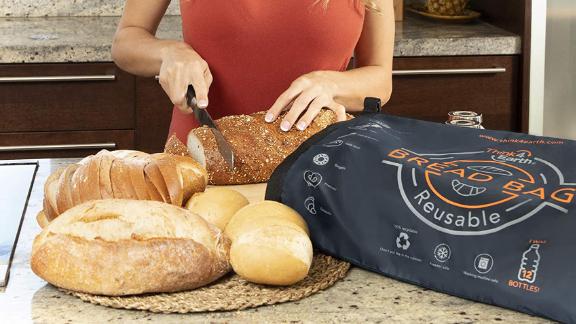
PHOTO: Amazon
Think4Earth Reusable Bread Bag


The freezer is also a great place to store bread. If you find your loaves get moldy before you have the opportunity to eat them, consider stashing half (or all of it) in the freezer and toasting up a slice whenever the desire hits. This special bread bag is freezer-safe and can also be used to store your homemade loaves on the counter, a great thing if you’ve succumbed to the sourdough frenzy.
Morfone Ice Cube Trays With Lids, 3-Pack ($14.99; amazon.com)

PHOTO: Amazon
Morfone Ice Cube Trays With Lids, 3-Pack


When you have too much fresh produce to use up at once, you can chop and freeze them for future soups and stews. You can also extend the life of herbs like mint, parsley, dill and cilantro by freezing them in ice cube trays with oil or butter for fancy infused cooking fat.

Have extra tomato sauce left over? Freeze it in individual cubes too, and then you’ve got portioned-out amounts ready for the making. Or try freezing yogurt with ripe fruit for a nourishing, icy treat available on demand. Silicone ice cube trays like this one are easy to stack and pop from — you can either keep your foods stored in the tray or pop them into a Stasher bag and keep frozen until you’re ready to use your individually portioned fancy infused oils.
Aulett Home Bacon Grease Container ($13.99, originally $24.95; amazon.com)
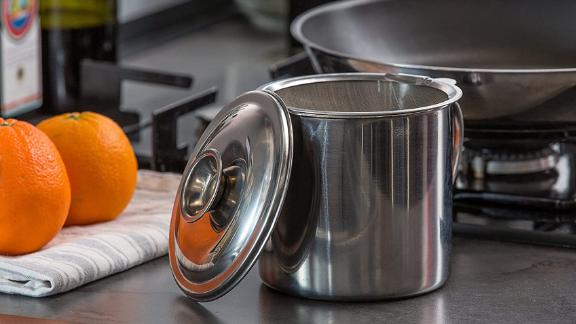
PHOTO: Amazon
Aulett Home Bacon Grease Container


Why let good fat go to waste? This bacon grease storage container allows you to bring that savory, bacony taste to so many dishes, elevating your recipes to a new level. The stainless steel container comes with a mesh strainer to sift out any remaining meat or burnt piece, leaving you with impeccable flavor to cook with.
Rubbermaid FreshWorks Produce Storage Containers, 3-Pack ($33.18, originally $37.99; amazon.com)
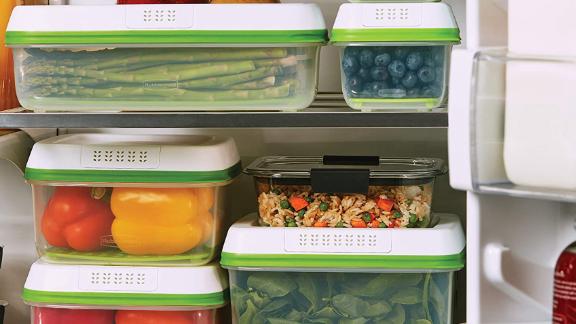
PHOTO: Amazon
Rubbermaid FreshWorks Produce Storage Containers, 3-Pack


These plastic containers have a perforated removable shelf that keeps your lettuce from getting mushy. By keeping your produce separated from any residual liquid, everything stays fresher longer. Plus, the fact that you can see what’s inside means that more people in your household will be inclined to reach for veggies and fruit. (FYI: It’s best to wash your produce right before you eat it rather than before you put it away for storage.)
Imperius Potato Bag and Onion Bag, 2-Pack ($12.98; amazon.com)

PHOTO: Amazon
Imperius Potato Bag and Onion Bag, 2-Pack


You certainly don’t need a special bag for your spuds and onions, but these might help you remember a very important rule: Neither potatoes nor onions should be stored in the fridge. Instead, you should keep both of these in a cool dark place, and this is where these bags can come in handy, since they have ties you can use to hang them from if you don’t have the cupboard space. Another thing to keep in mind: Potatoes and onions need to be kept separate from each other. If they’re not, they’ll both end up spoiling before you have the chance to cook with them.
BlendJet 2 ($49.95, originally $99.95; blendjet.com)

PHOTO: BlendJet
BlendJet 2


Fruit and veggies that are almost on their way out make for great smoothies and soups. Just pop them in the freezer, and when you’re ready for them, blend them up for breakfast, lunch or dinner. We love the BlendJet 2 because it’s portable, quiet and easy to clean, but any old blender will do for this trick.
NutriChef Vacuum Sealer ($53.99, originally $59.99; amazon.com)
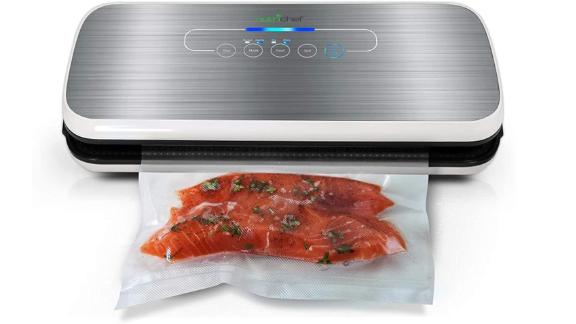
PHOTO: Amazon
NutriChef Vacuum Sealer


“For people who shop in bulk often, a vacuum sealer is a great tool to prevent food waste,” McCordie says. “Vacuum sealing helps to prevent freezer burn: Larger packs of food can be portioned out into the amount your family will eat in one meal, vacuum sealed and placed in the freezer.” These can also come in handy for your meal-prep purposes.

Wednesday, February 10, 2021

The Truth About Doing Yoga for Weight Loss

 Yoga may not be the most intense, calorie-torching workout, but the practice can help you shed pounds if weight loss is your goal.

Yoga can increase heart rate, burn calories, improve sleep, and reduce stress—all of which helps with weight loss. However, the number on the scale shouldn't be the only reason you begin a workout routine. Plus, it's worth noting that your diet plays an important role in weight management.

In fact, exercise may lead some people to consume more food, which can hinder weight loss. According to a study published last year, people who began exercising consumed roughly 90 more calories each day. It may seem like an insignificant amount of food, but researchers found this was enough to stall weight loss, according to the paper published in The American Journal of Clinical Nutrition.

That said, yoga is a great full body workout that can help you burn calories and be more mindful of your diet, says instructor Olivia Young, founder of Box + Flow in New York. She tells Men's Health what you should know before trying yoga to lose weight.

What type of yoga is best for weight loss?

If you're not familiar with the practice, there are various types of yoga—and some are relaxing while others are pretty intense. Young recommends Vinyasa because it's more athletic.

"It's strenuous. It's cardio-based. It's literally moving constantly," she says.

You may have also heard this referred to as"flow" because the movements run together, according to VeryWellFit. Within Vinyasa, there are various other subsets, like power yoga.

In comparison, Hatha focuses on one pose at a time and includes breaks between movements.

You should become acquainted with movements like the downward dog, high plank, and low push up, commonly found in a flow sequence, says Young.

Yoga improves other factors that help with weight loss

Research shows that yoga can help your body respond to stress more effectively, by reducing heart rate and blood pressure in stressful situations. What's more, one 2013 study found that people who practiced yoga reported having fewer sleeping disturbances compared to those who didn't. And both sleep and stress can affect your weight. That's because poor sleep increases ghrelin, a hormone that increases appetite. And worrying all the time increases cortisol, the stress hormone, which may lead to sugar cravings, according to WebMD.

How much weight can you lose doing yoga?

Weight loss varies by person and is dependent on a variety of factors including beginning weight, overall activity level, and diet. However, practicing yoga for at least four years was associated to gaining about three pounds less in people with normal Body Mass Indexes, according to a study published in Alternative Therapies in Health and Medicine.

For optimal results, Young recommends practicing yoga four times a week and pairing it with extra cardio, like shadow boxing or running.

It's natural to want fast results, but the most successful dieters lose weight slowly. The Centers for Disease Control & Prevention recommends losing no more than one to two pounds per week.

Monday, February 8, 2021

Why a wellness routine is your top priority amid protests and the pandemic — and how to start

(CNN)As states gradually reopen even as the pandemic wears on, many of us are concerned about our health and well-being. Especially now, with some continuing to stay at home and social distance while others join the throngs at nationwide Black Lives Matter protests, it may even be a priority.

From state to state, the loosening of restrictions vary, and within our local communities, the reality is that not only do people have different ideas on what constitutes social distancing but for many others still, in the face of racial inequality, the desire to create social change far outweighs the potential risk of spreading or catching the virus.
It's all the more reason to make sure we're taking the best care of ourselves to fortify against the disease. But while living a healthy life may be a desired goal, how to achieve it is another story.
    Even if you're someone whose healthful habits were perfected to a tee during pre-pandemic times, you may find yourself struggling to engage in even the most basic self-care in these increasingly unpredictable days.
    That's where a wellness routine can come in handy.
    I'm not talking about a spa escape every so often or even regular massages or chef-prepared meals (though all of that may sound really nice). I'm talking about creating your own personalized routine that will benefit you physically and emotionally, one that simply requires a regular commitment to yourself.
    Creating a wellness routine allows you to shift from diet culture and adopt healthy habits that easily fit into your daily lifestyle. What's more, having a routine allows you to focus on health goals by creating structure and organization, which can be particularly beneficial when things seem out of your control, like life during an unprecedented pandemic and simultaneous upheaval as people fight against social injustice.
    In fact, predictable routines, or ritualistic behavior "developed as a way to induce calm and manage stress caused by unpredictability and uncontrollability, heightening our belief that we are in control of a situation that is otherwise out of our hands," according to researchers at Tel Aviv University.
    "We need an internal structure because our external lives have become totally unstructured — and that triggers anxiety and stress," said Robin Foroutan, a New York City-based integrative medicine dietitian and spokesperson for the Academy of Nutrition and Dietetics.
    "In the beginning, we thought this was going to be a little break; a couple of short weeks, and then we'd resume life as we knew it. Now we know that probably is not going to be the case. We don't know how long this will last, but we can find ways to stay steady and structured on the inside amidst the chaos outside."
    Engaging in a wellness routine with a focus on good nutritionexercise, sleep and stress management can boost our health and well-being and strengthen our immunity during a time when we may need it most.
    And while social obligations, travel and other commitments typically make it challenging to start new habits, being stuck at home without these distractions provides an opportune time to start creating a wellness routine that is accessible, doesn't require a lot of money and is something that you can count on during this uncertain time — and in the future, too.


    How to create a wellness routine

    Health experts say it's important to create a manageable routine that you can stick with as part of a lifestyle — not something overly ambitious that you can't sustain. One way to do that is to start small and build upon it, as you feel comfortable.
    Here are some tips to get started in creating your personal wellness routine.

    Set regular times for sleeping, eating and exercise

    "Most people feel better when they are going to bed and waking up at consistent times, eating regular meals and snacks and getting a steady dose of exercise, said Marysa Cardwell, a registered dietitian, nutrition therapist and certified personal trainer based in Salt Lake City, Utah.
    For sleep: Everyone's sleep schedule is different, and that's OK, as long as you stick to your natural circadian rhythms, experts say. That means going to sleep when the sun is setting (or a bit later) and waking up when sun is rising (or a little later, according to your individual needs).
    Aiming for seven to nine hours of sleep is key, as it helps to "reduce the stress hormone cortisol and your adrenal load," Cardwell said.
    Getting adequate sleep also bodes well for engaging in other healthful behaviors — by going to bed at a reasonable hour, you'll be less likely to engage in nighttime eating or mindless eating in front of the TV, and you're more likely to wake up early and start exercise, Cardwell explained.
    For eating: Setting regular meal times, and taking a break to eat your food mindfully is key, Cardwell advised, but when you actually eat is up to you. "Some do well on three meals per day with an afternoon snack; others prefer three smaller meals and three snacks."
    Regardless of the pattern you choose, aim to eat at least every four hours, which prevents blood sugar from crashing and can lead to overeating. For example, if you're eating three meals and one afternoon snack, you might choose to eat breakfast at 8 a.m., lunch at 12 p.m., a snack at 4 p.m. and dinner at 7 p.m.
    Taking a few deep breaths, enjoying the wonderful smells of the food you are about to eat and chewing food really well can all help make mealtime a healthful ritual, Foroutan explained.
    Additionally, dinnertime can become a daily social ritual by sharing the meal with family or friends, advised Jen Scheinman, a Denver-based registered dietitian nutritionist and owner of Jen Scheinman Nutrition, a virtual nutrition coaching practice. "Even a Zoom dinner with a friend if you're by yourself can help you feel connected."
    For fitness: Pick a time that you're most likely to stick with. That might mean taking a morning walk before your day gets started, or scheduling your favorite fitness class on your calendar so you won't forget.
    "I shut my day down with a run or yoga at around 5:30 p.m. That's my last thing for the day. The more you can make it a routine, the less you have to think about it," Scheinman said.

    Plan for food, fitness and sleep

    Planning what you will eat and how you will exercise means that you are more likely going to do what you intend to do, which will ultimately help you achieve your health goals. For example, planning meals in advance means you'll be less likely to reach for quick sugary snacks when you run out of energy. It also helps to limit shopping trips.
    "Not only does planning your meals ahead of time help cut down on the number of times you're going to the grocery store, but it can also help reduce food waste and ensure you have meals that were intentionally picked to fit your nutritional goals," said Denver-based registered dietitian nutritionist Kelli McGrane.
    For food: Eating a nutrient-rich breakfast sets the stage for making other healthful choices throughout the day.
    Choose protein-rich breakfasts like egg whites, cottage cheese or smoked salmon on a bagel; Greek yogurt, smoothies with low-fat milk, high fiber cereals with milk or peanut butter on whole wheat toast.
    Scheinman recommended preparing breakfast foods ahead of time, like making overnight oats with milk. "It makes the breakfast routine less daunting."
    For lunch and dinner, Cardwell encouraged a fist-size portion of protein, such as fish, chicken or beans; a fistful of carbohydrates like whole wheat pasta or brown rice; and a half plate of veggies. This will help meet your micronutrient needs, as well as fiber. Use fats sparingly, as a condiment, to make your food taste better, but limit fried foods and saturated fat, Cardwell advised.
    For snacks, choose protein and carb combos, like cheese with crackers, sliced fruit with peanut butter, nuts and seeds with dried fruit or Greek yogurt. Pairing protein with carbs "helps keep your blood sugar level stable, and helps you stay fuller longer," Cardwell said.
    Scheinman recommended using the weekends for batch cooking, like making chili or soups, which you can freeze to enjoy later in the week. Washing and chopping veggies and fruit during the weekend can also save you time during the week.
    For fitness: Pick a fitness activity that inspires you — and is doable. There are a lot of fitness apps offering free trials and online Zoom fitness classes, so you can use this time as an opportunity to try something new. Cardwell recommended aiming for at least 30 minutes per day, if possible.
    If you are looking for a simple at-home cardio workout, MaryAnn Browning, founder and CEO of Browningsfitness in New York, recommended jumping jacks, high knees, butt kicks, burpees and switch jumps — during which you'll jump to turn 180 degrees and then back again — for 15 seconds each. Then repeat the circuit five to 10 times, depending on what you can handle.
    For at-home fitness essentials, Browning recommended getting a set of yellow, green and red resistance bands, which can be used for back, bicep, triceps, shoulders and leg work. She also recommended looped bands to go around the calves or thighs, which strengthen the glutes and can help prevent knee and back injuries.
    If you want to weight train but don't have equipment, anything that will give you muscle tension will be beneficial, such as jugs of water, books or even your children. "I use my kids — I'll do planks and have them sit on me ... or I'll do leg presses while letting them do airplane," Cardwell said.
    And don't forget to keep moving throughout your day. Tracking apps like Lose It! are a good way to see how normal daily activities can all count toward our daily fitness goals.
    "Dancing with your kids or partner, yard work, house projects, sex and cleaning are all trackable activities. Doing these activities with intention and extra vigor all count towards a healthy lifestyle," said Cardwell, who is also a contributing dietitian for Lose It!
    For sleep: Engage in a bedtime routine where you can quiet down and prepare for sleep. "Turn off electronics, including the TV, iPad, and cell phones an hour before bedtime," Scheinman advised. This helps to reduce exposure to blue light, which "the brain perceives as daylight, so your brain is not quite getting the signal that it's nighttime and melatonin is not produced."
    Unplugging also prevents you from checking one more email or scrolling through social media while in bed, which can be stimulating and interfere with sleep, Scheinman explained.

    Other tips for a successful wellness routine: a morning ritual and self-care

    Most experts recommended engaging in a morning ritual that brings you pleasure. "Starting your day with the same routine each morning can bring steadiness and calm to the rest of the day. You are starting from a more grounded and positive place, versus waking up; grabbing the phone and checking the news and getting stressed out," Foroutan said.
    "The morning is a nice time to start integrating things you didn't have time for previously — like taking the dog for a longer walk in the morning, making a nice cup of coffee you can sit and enjoy or engaging in a meditation practice," Scheinman added.
    "It sets the day off with a healthy intention, with a sense of comfort. ... I know this is what I do," Scheinman said.
    Foroutan enjoys waking up and writing down three things she is grateful for. "Starting the day with a thought about gratitude can be really centering. Writing it down does something extra — it solidifies the thought and intention. Not every day is good but there's something good in every day. Even if it's one small thing that gives you a sense of gratitude — that's really grounding and it can help shift your perspective."
    Stretching your body after you wake up or doing a sun salutation can help to get your blood flowing and your body moving in the morning.
    It's also important to prioritize self-care. "Make stress relievers like enjoyable activities a non-negotiable right now," Cardwell said. That may include knitting, taking an extra-long shower or bath, reading, taking a tea break, enjoying a glass of wine or calling family members. Even better, schedule these stress relievers into your day just like mealtimes and other obligations.
      "We're taking stock of what's important ... and [our] health is important. Doing these things now can help you deal with the stress of right now," Cardwell said.
      It can also keep you healthy and feeling good well into the future, too. That's a gift from quarantine life if there ever is one.

      Foods that can reduce stress

       Stress levels may be high these days, but did you know that what we choose to eat can help to reduce stress, ultimately allowing us to take charge of our mental health?

      "Instead of thinking of food as 'stress eating' or 'guilty pleasures,' we can think of using food to shape the lens in how we experience stress," said psychiatrist Dr. Drew Ramsey, an assistant clinical professor at Columbia University Vagelos College of Physicians and Surgeons and author of the upcoming book "Eat to Beat Depression and Anxiety."
      Taking control of stress with the foods we eat can help to counter inflammation throughout the body, as well as elevated levels of the hormone cortisol, which can otherwise lead to high blood sugar, increased appetite and weight gain, among other symptoms, according to Felicia Porrazza, a Philadelphia-based registered dietitian who helps stressed-out clients find natural ways to improve their overall wellness.
        Feeling less stressed already? I hope so! Here are some food suggestions to help you live in a state of calm in 2021.


        Open your palate to oily fish

        Try out anchovies, sardines and herring, in addition to salmon, trout and mackerel. These foods are a rich source of stress-busting omega-3 fatty acids known as DHA (docosahexaenoic acid) and EPA (eicosapentaenoic acid), which play an important role in brain health.
        "Increasing omega-3 fatty acids can help to regulate how our bodies handle stress," Porrazza said. Stress can increase inflammation in the body so if we can reduce inflammation by consuming more omega-3s, we could also potentially reduce cortisol levels, which could improve health and wellness, Porrazza explained. In fact, omega 3s help to blunt the cortisol response after acute stress, some research has shown. On the flip side, low levels of omega 3s may affect the function of the HPA, or hypothalamic-pituitary-adrenal, axis, which plays a role in how our bodies respond to stress, according to Porrazza.
        Omega-3 fats might help to reduce the symptoms of clinical anxiety, concluded a recent review and meta-analysis of 19 clinical trials involving over 2,200 participants from 11 countries.
        Consuming high amounts of these fatty acids in fish may help protect us from depression, too, according to other research.
        Need some ideas besides grilled salmon? Try a Caesar salad with an anchovy vinaigrette dressing, or add some herring to your Sunday bagel order.

        Mix it up with shellfish

        Mussels, clams and oysters are rich in vitamin B12 in addition to omega-3s, which are both prominent nutrients in diets connected with lower anxiety, Ramsey explained.
        In fact, B vitamins, including vitamin B12, help to maintain the nervous system, and stress can cause a slight increase in the body's requirements of these B vitamins, explained Martha McKittrick, a New York City-based registered dietitian who provides nutrition counseling and wellness coaching to many stressed-out New Yorkers.
        Vitamin B deficiencies can increase the risk of developing stress-related symptoms such as irritability, lethargy and depression.
        Since vitamin B12 is not produced by plants, if you are vegan, you should ensure that you are consuming vitamin B12 from fortified foods or a supplement.

        Consume more vitamin C

        Foods such as red and green peppers, oranges, grapefruit and kiwi are rich in vitamin C, which in high doses has antidepressant effects and improves mood, and may be helpful in treating stress-related disorders.
        Other research has revealed that vitamin C may help reduce anxiety among high school students.
        To boost your vitamin C intake, aim to include one vitamin C-rich food with a meal, and another for a snack. You could also try one of my favorites: dark chocolate-dipped kiwis or oranges for dessert!

        Choose healthy carbs

        Carbohydrates can help to boost serotonin production in the brain, which is key in influencing our mood. "Serotonin is a neurotransmitter that is responsible for happiness and well-being," Porrazza said.
        Serotonin has a calming effect and also promotes sleep and relaxation, McKittrick explained. In fact, low levels of brain serotonin, research has suggested, can lead to increased vulnerability to psychosocial stress.
        Tryptophan is an amino acid that is necessary for the production of serotonin in the brain. Complex carbs including whole grains and vegetables can help boost levels of serotonin because they make tryptophan more available in the brain.
        Carbs like soybeans and peas also deliver a small dose of protein, which can help to balance blood glucose levels. This benefit is important, since fluctuations in blood glucose can cause irritability and worsen stress levels.
        Additionally, if you eat too many highly processed carbs that are loaded with sugar and lack protein or healthy fats, like cookies and sweets, you can experience blood sugar spikes and crashes, "and that can make you feel more stressed," McKittrick added.

        Fill up on fermented foods

        Fermented foods such as yogurt, kombucha, kefir, tempeh and sauerkraut contain friendly bacteria known as probiotics, which have the ability to reduce stress and cortisol levels.
        In fact, randomized controlled trials featuring probiotics suggest a causal link between the gut microbiota and stress responding.
        Feeling shy? Fermented foods may help reduce symptoms of social anxiety, too, research has shown. These probiotic-rich foods may also help control negative thoughts that are associated with low moods.
        How does it all work? Our gut bacteria produce about 95% of our body's serotonin supply, which can positively affect how we feel, according to Porrazza. On the flip side, stress can increase inflammation and gut dysbiosis, which is basically an imbalance of the gut microbiota, and this can negatively influence mood.
        Other fermented foods include sourdough bread, kimchi, miso and pickles.
        Ramsey fights stress with a kefir-rich banana smoothie. "I get a good dose of potassium from the banana and I add nuts, cinnamon and cacao for its anti-inflammatory properties. It's a great energy and brain boost."
        Bananas are also a source of vitamin B6, which helps in the conversion of tryptophan into serotonin.

        Munch on magnesium-rich foods

        A lot of times when you are stressed out, your magnesium levels can become depleted, McKittrick explained. "If you have a magnesium-deficient diet, it can raise stress hormones, so it is important to eat magnesium-rich foods, like leafy green vegetables, nuts and seeds; legumes; and whole grains," she said.

        Conquer stress with crunchy foods

        "A lot of my clients, when they think about crunchy foods, they think of chips, but sometimes you can manage stress with healthier crunchy foods like celery and carrots with hummus," Porrazza said.
        Cutting up an apple and then munching on it can also release stress, as Porrazza has observed with her clients. "Doing something with their hands can help them take themselves out of their head and give them a little bit of a mindful moment, which can take them out of the stress of the moment," she added.

        Take a tea break

        Green, black and oolong teas are rich in theanine, an amino acid that helps reduce stress and promote calm feelings.
        These teas are also rich in antioxidants, which can help reduce oxidative stress in the body, which helps protect against disease.
        Black tea in particular has been studied for its role in stress recovery and reduction in cortisol levels.
        And while there isn't enough research to show that chamomile reduces stress, the act of sitting and drinking a cup of this herbal tea may be calming for some, Porrazza explained.

        Other stress-busting diet tips

        Lastly, there are a few diet strategies to avoid, in order to feel less stressed. One is to consume less caffeine.
        "Caffeine has effects on the brain and nervous system and can elevate cortisol levels and exacerbate the effects of stress on the body," McKittrick said.
          Because of caffeine's effects, it's important to pay attention to how your body responds to caffeine. "If I am stressed, I can only have half a cup of coffee," 
          And it's important to not go too long without eating. Doing so can cause low blood sugar, which can make you feel more irritable and worsen stress. "It's very individual, but for most I would say don't go more than four to five hours without food -- but pay attention to your own body," McKittrick said.

          Tuesday, February 2, 2021

          26 Plants You Should Always Grow Side-By-Side

           Seasoned gardeners know that a diverse mix of plants makes for a healthy and beautiful garden. Many believe that certain plant combinations have extraordinary (even mysterious) powers to help each other grow. Scientific study of the process, called companion planting, has confirmed that some combinations have real benefits unique to those pairings.

          a close up of a flower garden: Companion planting uses one species' advantages to help another. Check out these 13 power pairs!© Willowpix - Getty Images Companion planting uses one species' advantages to help another. Check out these 13 power pairs!

          Companions help each other grow and use garden space efficiently. Tall plants, for example, provide shade for sun-sensitive shorter plants. Vines can cover the ground while tall stalks grow skywards, allowing two plants to occupy the same patch.

          Some couplings also prevent pest problems. Plants can repel harmful organisms or lure the bad bugs away from more delicate species.


          These combinations of plants do way better, together:


          Roses and Garlic

          Gardeners have been planting garlic with roses for eons since the bulbs can help to repel rose pests. Garlic chives are probably just as repellent, and their small purple or white flowers in late spring look great with rose flowers and foliage.


          Marigolds and Melons

          Certain marigold varieties control nematodes in the roots of melon without using chemical treatments.


          Tomatoes and Cabbage

          Tomatoes repel diamondback moth larvae, which can chew large holes in cabbage leaves.


          Cucumbers and Nasturtiums

          The nasturtium's vining stems make them a great companion rambling among your growing cucumbers and squash plants, suggests Sally Jean Cunningham, master gardener and author of Great Garden Companions>>>P. Nasturtiums reputedly repel cucumber beetles, but they can also serve as a habitat for predatory insects like spiders and ground beetles.


          Peppers and Pigweed

          Leafminers preferred both pigweed (also called amaranthus) and ragweed to pepper plants in a study at the Coastal Plains Experiment Station in Tifton, Georgia. Just be careful to remove the flowers before the weeds set seed.


          Cabbage and Dill

          "Dill is a great companion for cabbage family plants, such as broccoli and brussels sprouts," Cunningham says. The cabbages support the floppy dill, while the dill attracts the helpful wasps that control cabbage worms and other pests.


          Corn and Beans

          The beans attract beneficial insects that prey on corn pests such as leafhoppers, fall armyworms, and leaf beetles. The vines can also climb up the corn stalks.


          Lettuce and Tall Flowers

          Nicotiana (flowering tobacco) and cleome (spider flower) give lettuce the light shade it grows best in.


          Radishes and Spinach

          Planting radishes among your spinach will draw leafminers away from the healthy greens>>>P. The damage the leafminers do to radish leaves doesn't prevent the radishes from growing nicely underground.


          Potatoes and Sweet Alyssum

          The sweet alyssum has tiny flowers that attract delicate beneficial insects>>>P, such as predatory wasps. Plant sweet alyssum alongside bushy crops like potatoes>>>P, or let it spread to form a living ground cover under arching plants like broccoli. Bonus: The alyssum's sweet fragrance will scent your garden all summe longr.


          Cauliflower and Dwarf Zinnias

          The nectar from the dwarf zinnias lures ladybugs and other predators that help protect cauliflower>>>P.


          Collards and Catnip

          Studies have found that planting catnip alongside collards reduces flea-beetle damage on the collards. The fragrant plant may also help repel mosquitoes>>>P.


          Strawberries and Love-In-A-Mist

          Tall, blue-flowered love-in-a-mist (Nigella damascena)"looks wonderful planted in the center of a wide row of strawberries," Cunningham says "