Monday, July 30, 2018

Gohar Rasheed requests for Jemima's presence at Imran Khan's oath-taking ceremony


With Prime Minister-elect Imran Khan buckling up to take charge, Pakistan’s acclaimed actor Gohar Rasheed has stepped in with a distinctive and noteworthy petition.

The 'Rangreza' actor took to social media platform Twitter making a request for Khan’s ex-wife Jemima Goldsmith to be invited to the oath-taking ceremony of the newly elected Prime Minister.

“It is my humble request to the foreign ministry to please invite Ms Jemima Khan as an honourable guest in the oath taking ceremony of the new Prime Minister Of Pakistan. We all owe her a special thanks due to many reasons. This would be a best tribute to a sincere friend of Pakistan,” stated his tweet.


It is my humble request to the foreign ministry to please invite Ms. #JemimaKhan as an honourable guest in the oath taking ceremony of the new #PrimeMinisterOfPakistan we all owe her a special thanks due to many reasons this would be a best tribute to a sincere friend of .


The 34-year-old’s tweet sparked a zest amongst social media users who expressed their fervor in having Goldsmith be present as the new premier pledges to the country.

Goldsmith had earlier uttered her delight following the Pakistan Tehreek-e-Insaf lead in the general election results stating: “22 years later, after humiliations, hurdles and sacrifices, my sons’ father is Pakistan’s next PM,” the tweet read. “It’s an incredible lesson in tenacity, belief and refusal to accept defeat. The challenge now is to remember why he entered politics in the first place. Congratulations, Imran Khan.”

A veiled first lady with spiritual, political skills


LAHORE: With Imran Khan as its premier, Pakistan is going to have a unique international honour of having a veiled Bushra Wattoo-Khan as its First Lady, keeping the Islamic tradition of observing purdah and not bowing to the pressures of the modern times.

A UK-based religious scholar Mufti Masod Alam, OBE (Order of British Empire), called me the other day to appreciate Bushra Khan keeping her religion and spiritual tradition much above the worldly power games.

Reliable sources have revealed that clairvoyant Bushra Khan’s prophecies about Pakistan’s general elections and Imran Khan becoming a prime minister have proved true. These sources claim that her prediction about Khan’s Pakistan Tehrik-e-Insaaf party getting 116 seats, made much before the elections, has also proved correct.

These sources say the would-be First Lady is not a lame duck Pirni or spiritual guide, sitting behind the curtains and just offering prayers and predicting events. “She is very practical and advises her husband on religious, spiritual and political issues. She was instrumental in getting Pir of Siyal Sharif, Pirs of Sultan Baho and even Pirs of Manki Sharif accommodated in the PTI ranks,” they say.

Bushra Khan’s political skills were observed well when in her native district Pakpattan she used her clout in such a way as to ensure the defeat of her ex bother-in-law and the Pakistan Muslim League-Nawaz (PML-N) candidate Ahmed Raza Maneka at the hands of an independent candidate, Sardar Mansab Ali Dogar. She also won over the blessings of the Diwan (caretaker of Baba Farid shrine) of Pakpattan, Moudood Masood, through his close relative Diwan Azmat Chishti. She also managed her son-in-law Mohammad Hayat Maneka’s provincial assembly seat [PP-191] by disfavouring the PTI candidate from the same constituency. This PTI candidate ultimately revolted against the party and sided with an independent National Assembly candidate Rao Naseem Hashim who was denied a PTI ticket.

The would-be First Lady holds sway in Barelvi and spiritual circles. She sought some sort of seat arrangement with Tehrik-e-Labbaik, Pakistan (TLP) sending an emissary to its head Allama Khadim Rizvi but it could not materialize due to shortage of time. Her religious beliefs are strong and she condoned Maulana Rizvi’s outburst against Imran Khan and warned her husband to be careful on the issue of Khatam-e-Nabuwwat [finality of Prohethood] in future. It was through her advice and courtesy that Imran Khan had a three-hour marathon meeting with Mufti Muneeb-ur-Rehman, Chairman of the Ruayat-e-Hilal Committee to clear the air with Ahl-e-Sunnat-wal-Jamaat.

The sources claim that the her presence has had a very positive effect on Banigala. Now Imran Khan, the would-be prime minister, says his prayers regularly for five times and feels purity around in the company of the newly-attained spiritual power.

Captain Khan Can


Captain Khan can given the history of democracy, or lack of it, in much of the Islamic world, it is incredibly uplifting when a Muslim country manages to choose its leaders democratically. The epic nature of such an exercise can hardly be exaggerated when it involves a geopolitically strategic and volatile country like Pakistan.

A nation of more than 200 million people, the first to be created as a modern Islamic state and the homeland of the Muslims of Subcontinent, Pakistan has had an eventful history, tottering from one existential crisis to another. If its creation after Partition in August 1947 had been soaked in blood, claiming millions of lives, it witnessed more bloodshed in 1971 with its two wings parting ways following a bloody civil war that gave birth to Bangladesh.

Whatever the historical causes and factors behind the creation of Pakistan, there is no doubt that Mohammad Ali Jinnah, hailed by his people as Quaid-e-Azam, had envisioned a progressive, and above all, a democratic state that represented and celebrated the best of Islamic values and teachings. Unfortunately, Jinnah had no time to realise his dream. He died within a year of Pakistan’s creation when his leadership was needed the most to steer the new nation. Prime Minister Liaquat Ali Khan, his successor and leading light of the Pakistan Movement, was brought down not long after by an assassin’s bullet, encouraging the army to step in.

Not surprisingly, while its big neighbour India progressed steadily on the path of democracy and self-reliance under such stalwarts as Jawaharlal Nehru holding free and democratic elections at regular intervals, Pakistan held its first general election 17 years after Independence, under the watchful gaze of the army. For much of its tumultuous history, Pakistan has been governed by dictatorships.

Until 2013, no democratically elected government had managed to complete its full five-year term. Even in the rise and rise of Imran Khan’s PTI, which finally appears all set to capture power, and in the slow and certain demolition and discrediting of the PML-N, many are tempted to see behind-the-scenes manipulation.

However, it would be simplistic and even naive to see the PTI and Imran as a creation to counter the likes of Sharifs and Bhuttos. It has taken the cricketer-turned-politician 22 long years to come this far. To be fair to him, Imran has worked really hard to turn the PTI from a loosely organised movement into a disciplined and focused, election-winning machine. The massive popular support and adulation that the cricket icon has been visibly attracting across the length and breadth of Pakistan today couldn’t possibly be the creation of a government agency or military institution, however clever or powerful.

Of course, Imran is hardly a paragon of virtues and is not without his share of flaws and controversies. Indeed, the recent tell-all book by Reham Khan, his second ex, has left a distinct, lingering distaste in the mouths of many a distant admirers like me. Yet, if the people of Pakistan have chosen Imran’s squad, the sniggering pundits and doubting Thomases have to accept it and learn to respect the popular mandate.

After long years of lackadaisical governance, lack of accountability and a near collapse of institutions, it seems Pakistanis are craving for change and a new beginning for the country. Imran has no time to celebrate and revel in his hard-earned victory though. He takes charge of a country that is in crisis mode and is battling mindboggling challenges on virtually every front.

The second half of the PML-N government had been marked by an imperceptible tug of war between the civilian and military ends, resulting in a crippling leadership vacuum. It had brought the business of governance to a grinding halt. The economy has never been in a worse shape. The Pakistani rupee has hit rock bottom and foreign exchange reserves are nearly deplete.

On the external front too, Pakistan finds itself increasingly isolated from its traditional allies and friends as Narendra Modi’s India constantly expands its sphere of influence across the neighbourhood, including in the Arab and Islamic world. Led by an unpredictable and volatile Donald Trump, the fair-weather ‘friend and ally’, the US, has been steadily turning the heat on Islamabad over its apparent support to the Afghan Taliban and assorted militant groups in the region.

In other words, Kaptaan Sahib inherits a most complex country at one of the most challenging points in its history. And, given the impossible hopes and optimism that he and his team have generated in an overwhelmingly young and aspiring country with their long campaign, they wouldn’t find it easy to meet all those expectations and aspirations. Especially considering that after more than two decades of its existence, the PTI is beginning to increasingly look like the two leading, older parties led by the Sharifs and Bhuttos. Indeed, as Imran’s popularity has grown over the years and power appeared within striking distance, he attracted many of the usual suspects from the traditional parties.

Be that as it may, Captain Khan has no option but to do everything possible in his power to deliver on his promises. He must do all that is necessary to ensure that the PTI does not end up becoming yet another political party patronised by the corrupt and special interests of all hues.

Having waited for power and his historic opportunity all these years, Imran cannot afford to let down his legion of supporters and the people of Pakistan. He cannot belie the hopes and aspirations of all those who saw in the ascent of the PTI a chance for clean and positive politics. Not an easy feat considering the overwhelming challenges and odds facing the country.

However, just as he came from behind to lead a struggling side to the heights of glory in the 1992 World Championship, all of us who loved his inimitable antics on the pitch would like to believe that Captain Khan could once again rescue Pakistan and lead it to glory.

The people of Pakistan, let down by both spectrums of governance, deserve better. A ‘new Pakistan’ beckons. One only hopes Imran is luckier in power than he has been in his personal life.

Pakistani rupee strengthens 4.3 pct on reports of China loan


KARACHI: The Pakistani rupee surged by 4.3 percent to 122.24/123.86 per dollar on Monday, following domestic media reports over the weekend that China had agreed to provide $2 billion in loans.

A State Bank of Pakistan spokesman declined to comment on Monday about the media reports.


Monday brought the first significant strengthening in years for the rupee, which has weakened more than 20 percent since December after four separate devaluations by the central bank.

Karachi-based brokerage Intermarket Securities said weekend publication of full results of the July 25 election may have also helped sentiment, as did media reports of possible inflows from Saudi Arabia.

Officials from Imran Khans Pakistan Tehreek-e-Insaf (PTI), or Pakistan Movement for Justice, party said they were in talks with independents and at least one other political party to form a coalition government.

But the rupee's advance might be short-lived, given Pakistan's economic problems, analysts said.

"Short-term flows aside, it is difficult to see the (rupee) sustaining its pullback for long," Intermarket Securities said in a note.

Many analysts expect Pakistan to turn to the International Monetary Fund for a bailout, which is expected to be in excess of $10 billion, according to local media reports.

Liquid water 'lake' revealed on Mars


Researchers have found evidence of an existing body of liquid water on Mars.

What they believe to be a lake sits under the planet's south polar ice cap, and is about 20km (12 miles) across.

Previous research found possible signs of intermittent liquid water flowing on the martian surface, but this is the first sign of a persistent body of water on the planet in the present day.

Lake beds like those explored by Nasa's Curiosity rover show water was present on the surface of Mars in the past.

However, the planet's climate has since cooled due to its thin atmosphere, leaving most of its water locked up in ice.

The result is exciting because scientists have long searched for signs of present-day liquid water on Mars, but these have come up empty or yielded ambiguous findings. It will also interest those studying the possibilities for life beyond Earth - though it does not yet raise the stakes in the search for biology.

The discovery was made using Marsis, a radar instrument on board the European Space Agency's (Esa) Mars Express orbiter.Image copyrightNASA/JPL/MALIN SPACE SCIENCE SYSTEMSImage captionThe proposed lake sits beneath ice near the south pole of Mars

"It's probably not a very large lake," said Prof Roberto Orosei from the Italian National Institute for Astrophysics, who led the study.

Marsis wasn't able to determine how thick the layer of water might be, but the research team estimate that it is a minimum of one metre.

"This really qualifies this as a body of water. A lake, not some kind of meltwater filling some space between rock and ice, as happens in certain glaciers on Earth," Prof Orosei added.Image copyrightESA/INAFImage captionArtists' impression: Mars Express probing the planet's surface. Marsis radar results above.
How was it found?

Radar instruments like Marsis examine the surface and immediate subsurface of the planet by sending out a signal and examining what is bounced back.

The continuous white line at the top of the radar results above marks the beginning of the South Polar Layered Deposit; a filo pastry-like accumulation of water ice and dust.

Beneath this, researchers spotted something unusual 1.5km under the ice.

"In light blue you can see where the reflections from the bottom are stronger than surface reflection. This is something that is to us the tell tale sign of the presence of water," says Prof Orosei.Image copyrightUSGS ASTROGEOLOGY SCIENCE CENTER, ARIZONA STATE UNImage captionArtists' impression: Marsis data shows an area of high reflectivity (dark blue) which is thought to be water

What does this mean for life?

Nothing definitive. Yet.

Dr Manish Patel from the Open University explained: "We have long since known that the surface of Mars is inhospitable to life as we know it, so the search for life on Mars is now in the subsurface.

"This is where we get sufficient protection from harmful radiation, and the pressure and temperature rise to more favourable levels. Most importantly, this allows liquid water, essential for life."

This principle of following the water is key to astrobiology - the study of potential life beyond Earth.

So while the findings suggest water is present, they don't confirm anything further.

"We are not closer to actually detecting life," Dr Patel told BBC News, "but what this finding does is give us the location of where to look on Mars. It is like a treasure map - except in this case, there will be lots of 'X's marking the spots."Image copyrightSCIENCE PHOTO LIBRARYImage captionAstrobiologists study extreme environments like salt lakes on Earth to understand how life might survive on Mars

The water's temperature and chemistry could also pose a problem for any potential martian organisms.

In order to remain liquid in such cold conditions (the research team estimate between -10 and -30 Celsius where it meets the ice above), the water likely has a great many salts dissolved in it.

"It's plausible that the water may be an extremely cold, concentrated brine, which would be pretty challenging for life," explained Dr Claire Cousins, an astrobiologist from the University of St Andrews, UK.
What next?

While its existence provides a tantalising prospect for those interested in the possibility of past or present life on Mars, the lake's characteristics must first be verified by further research.

"What needs to be done now," explained Dr Matt Balme from the Open University, "is for the measurements to be repeated elsewhere to look for similar signals, and, if possible, for all other explanation to be examined and - hopefully - ruled out.

"Maybe this could even be the trigger for an ambitious new Mars mission to drill into this buried water-pocket - like has been done for sub-glacial lakes in Antarctica on Earth," he added.Image copyrightSCIENCE PHOTO LIBRARYImage captionThe area has been compared to Lake Vostok, which lies 4km beneath the Antarctic ice

Scientists have previously claimed to find bacterial life in the buried depths of Antarctica's Lake Vostok, but drilling on Mars would make for an ambitious project indeed.

"Getting there and acquiring the final evidence that this is indeed a lake will not be an easy task," said Prof Orosei.

"It will require flying a robot there which is capable of drilling through 1.5km of ice. This will certainly require some technological developments that at the moment are not available."

The findings were reported in Science.

Petrichor: why does rain smell so good?


It turns out it's not just gratitude that makes rain smell so appealing after a long period of dry weather.

There's actually some chemistry involved too.

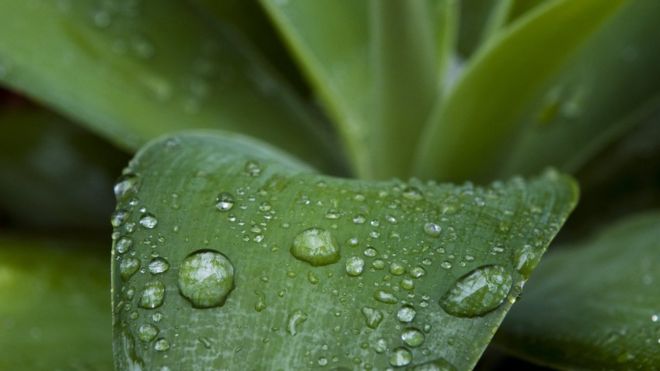
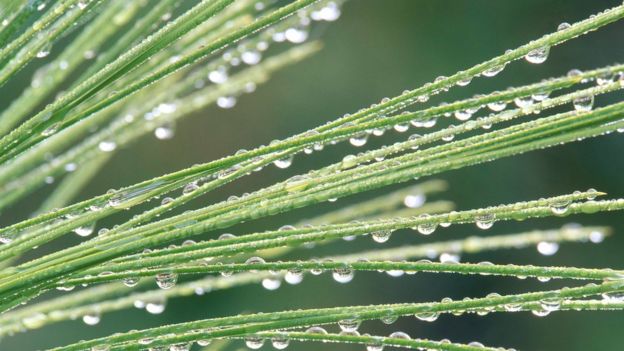
Bacteria, plants and even lightning can all play a role in the pleasant smell we experience after a thunderstorm; that of clean air and wet earth.

Known as petrichor, the scent has long been chased by scientists and even perfumers for its enduring appeal.

Wet earth

First named by two Australian researchers in the 1960s, the warm, earthy fragrance we experience when rain hits dry ground is produced by bacteria.


"These critters are abundant in soil," explained Prof Mark Buttner, head of molecular microbiology at the John Innes Centre.

"So when you're saying you smell damp soil, actually what you're smelling is a molecule being made by a certain type of bacteria," he told the BBC.

That molecule, geosmin, is produced by Streptomyces. Present in most healthy soils, these bacteria are also used to create commercial antibiotics.

Drops of water hitting the ground cause geosmin to be released into the air, making it much more abundant after a rain shower.

"Lots of animals are sensitive but human beings are extremely sensitive to it," added Prof Buttner.


Isabel Bear and RG Thomas, the researchers who first named the scent petrichor, found that as early as the 1960s it was being captured to sell as a scent called "matti ka attar" in Uttar Pradesh, India.

Now, geosmin is becoming more common as a perfume ingredient.

"It's a really potent material and it smells just like the concrete when the rain hits it," said perfumer Marina Barcenilla. "There's something very primitive and very primal about the smell."

"Even when you dilute it down to the parts per billion range, [humans] can still detect it," she added.

Yet we also have an odd relationship with geosmin - while we are drawn to its scent, many of us dislike its taste.


Even though it is not toxic to humans, the tiniest amount can put people off mineral water or wine when it is present.

"We do not know why we dislike geosmin," commented Prof Jeppe Lund Nielsen from Aalborg University in Denmark.

"It is not toxic to humans in typical found ranges, but somehow we associate it with something negative," he added.

Petrichor: The term:

Coined by scientists Isabel Joy Bear and Richard Thomas in their 1964 article "Nature of Argillaceous Odour", published in the journal Nature.

The word was coined from Greek petros, meaning "stone", and ichor, meaning "the fluid that flows in the veins of the gods"

Plants

According to Prof Nielsen, research also indicates that geosmin could be related to terpenes - the source of scent in many plants.


Rain could bring these fragrances out, says Prof Philip Stevenson, a research leader at Royal Botanic Gardens, Kew.

"Often the plant chemicals that smell pleasant are produced in leaf hairs... and the rain may damage these, releasing the compounds.

"Rain may also break dry plant material releasing chemicals in a similar way to when you crush dried herbs - the smell becomes stronger," he told the BBC.

Very dry periods may also slow down plant metabolism, with renewed rainfall giving it a kick start and causing plants to release a pleasant scent.


Lightning bolts

Thunderstorms have their role to play too, creating the clean, sharp scent of ozone - caused by lightning and other electrical discharges in the atmosphere.

Prof Maribeth Stolzenburg of the University of Mississippi explains: "Besides the lightning, the thunderstorm and especially the rain will improve the air quality. Much of the dust, aerosols, and other particulates are rained out and the air clears."

Supreme Court backs agreed end-of-life decisions

Person being treated in hospital

Legal permission will no longer be required to end care for patients in a long-term permanent vegetative state, the Supreme Court has ruled.

It will now be easier to withdraw food and liquid to allow such patients to die across the UK.

When families and doctors are in agreement, medical staff will be able to remove feeding tubes without applying to the Court of Protection.

Lady Black ruled there was no violation under the Human Rights Convention.
The families enduring 'an agonising wait'
How many minimally conscious patients are there?

The Court of Protection has ruled on cases for 25 years but the process can take months or years, and it costs health authorities about £50,000 in legal fees to lodge an appeal.

The ruling could have an impact on the thousands of families whose loved ones are in a vegetative state. It is estimated about 24,000 people in the UK are in a persistent vegetative state or a minimally conscious state.


Media captionCourt backs end-of-life judgement

The case was brought to the Supreme Court after a banker in his 50s suffered a heart attack, resulting in severe brain damage.

He has since died but the case continued so that a court ruling could be made.
Analysis: 'Judgement will divide opinion'

By BBC legal correspondent Clive Coleman

For years - so long as relatives agree, and it's in the best interests of a patient in a minimally conscious or vegetative state - doctors have been able to withdraw all sorts of treatment that will result in the end of someone's life.

These include, for instance, the withdrawal of life-saving dialysis. Doctors do not need the permission of a court to be able to do this.

However, withdrawing food and water - the most basic requirements for life - has been handled differently. Since the case of Hillsborough survivor Anthony Bland in 1993, it has been regarded as a matter of practice that doctors must seek the approval of a court, even when they and relatives agree withdrawal would be in the best interests of the patient.

It has been treated as an exception, in part, perhaps, because of the emotional and psychological significance of the decision to remove sustenance from a person.

This has resulted, some experts believe, in individuals spending longer on life support in a vegetative state than was necessary because hospitals have shied away from going to court due to the expense and bureaucracy involved.

Monday's ruling makes clear that courts need not be involved in these sorts of cases, so long as doctors and families are in agreement, and it is in the best interests of the patient.

However, the judgement cuts across ethical and religious beliefs and will divide opinion.

Some will see it as compassionate and humane, others the removing of a vital legal safeguard for a highly vulnerable group.

The man, known as Mr Y, was unresponsive after his heart attack last year and there was no chance of recovery.

His family and his doctors agreed it would be in his best interests to allow him to die by withdrawing his feeding tube.

The NHS trust asked the High Court to declare that it was not necessary to apply to the Court of Protection for a decision when the doctors and the family all believe it is in the patient's best interests.

The judge agreed, but the official solicitor appealed on behalf of Mr Y - an appeal which has now been dismissed.Image captionJodie Simpson died in 2016, after the Court of Protection agreed that her care could be ended

The mother of a woman whose care was ended after a Court of Protection ruling said the Supreme Court's judgement would make "a vast difference".

Jean Simpson's daughter Jodie, 38, took an overdose at home in Barrow in Furness in 2012.

It took several years for Jodie to be assessed as being in a permanent vegetative state, and after two assessments she was eventually moved to a hospice in 2016, where she died.

Jean said if the Supreme Court judgement had been around at the time of Jodie's overdose "I don't think it would've gone on for four years".

"All that time me and her children were grieving and we just weren't listened to," she added.Image captionHillsborough victim Tony Bland was in a vegetative state for four years until a landmark case allowed doctors to withdraw his feeding tubes

The right to end care for vegetative patients began in 1993 with Tony Bland, who had been in a vegetative state since 1989, until the House of Lords agreed that removing food and water did not constitute murder.

But they did say referring similar cases to the Court of Protection was best practice.

In Monday's Supreme Court judgement, Lady Black said an agreement between families and doctors was sufficient safeguarding to ensure "public confidence".

But she urged families to apply to court "where there are differences of view" between relatives or medical professionals.
What is a vegetative state?


Media captionThere's been a 'misrepresentation' over end-of-life decision says Professor Derrick Wade on R4 World at One
A vegetative state is when a person is awake but is showing no signs of awareness. They may open their eyes, wake up and fall asleep at regular intervals and have basic reflexes. They're also able to regulate their heartbeat and breathing without assistance
A person in a vegetative state doesn't show any meaningful responses, such as following an object with their eyes or responding to voices. They also show no signs of experiencing emotions
Continuing - or persistent - vegetative state is when this happens for more than four weeks
Permanent vegetative state is defined as more than six months if caused by a non-traumatic brain injury, or more than 12 months if caused by a traumatic brain injury
If a person is diagnosed as being in a permanent vegetative state, recovery is extremely unlikely but not impossible

Source: NHS Choices